
DHI Direct hair transplant is a modern hair transplant method in which hair follicles are extracted one by one from the donor area and placed directly into the recipient area with the help of special implanter pens. The goal of this technique is to achieve a natural hair appearance by placing the hair follicles at the correct angle, direction, and depth.
At Transes Hair Transplant Clinic, the DHI hair transplant process is planned by evaluating the patient's hair loss type, donor area capacity, hair shaft thickness, existing hair density, facial structure, and the likelihood of long-term hair loss. Because DHI is a detailed and precise technique. When used on the right patient with the right planning, it can be a strong option, especially for hairline design and densification procedures.
DHI hair transplant is not automatically the best method for every patient. Sapphire FUE may be more suitable for some patients, Hybrid hair transplant for others, and DHI for others still. What matters here is not that the technique is popular, but that it genuinely suits the patient's hair structure and expectations.
DHI is a hair transplant method in which hair follicles are placed directly into the recipient area using special implanter pens. In classic FUE or Sapphire FUE methods, channels are usually opened first, and grafts are then placed into these channels. In the DHI method, channel opening and placement are carried out in a more controlled way with the help of the implanter pen.
In this method, grafts are extracted one by one from the donor area using the FUE technique. The extracted hair follicles are preserved under special conditions. They are then loaded into implanter pens and transferred to the target area.
One of the most important features of the DHI method is that it allows control over the angle, direction, and depth during the placement of hair follicles. For this reason, it can be preferred especially in the front hairline, temple area, small areas of baldness, or situations where densification is needed between existing hair.
DHI on its own is not a method that guarantees a natural result. A natural appearance requires correct hairline design, graft selection, donor area management, and experienced application.
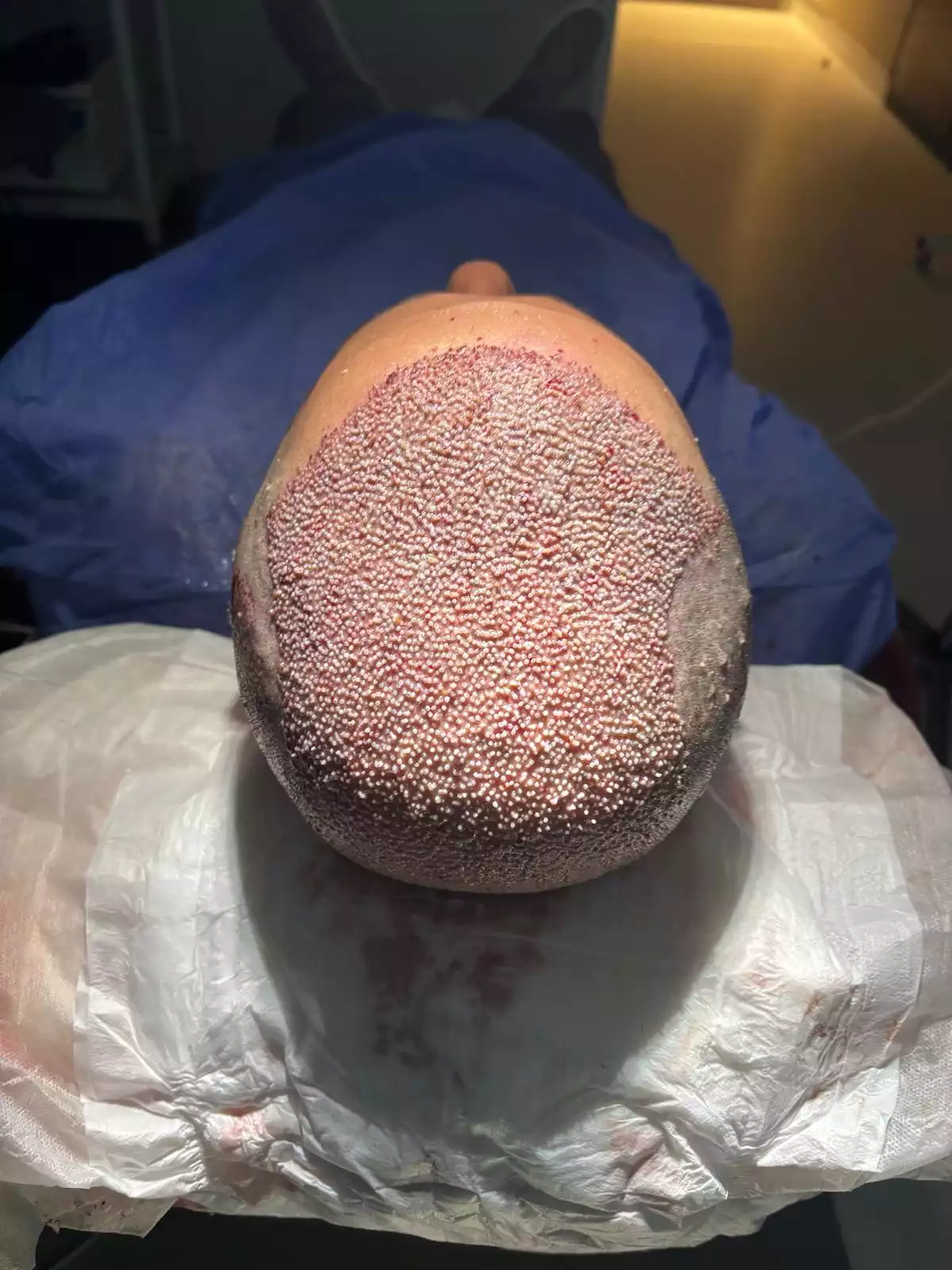
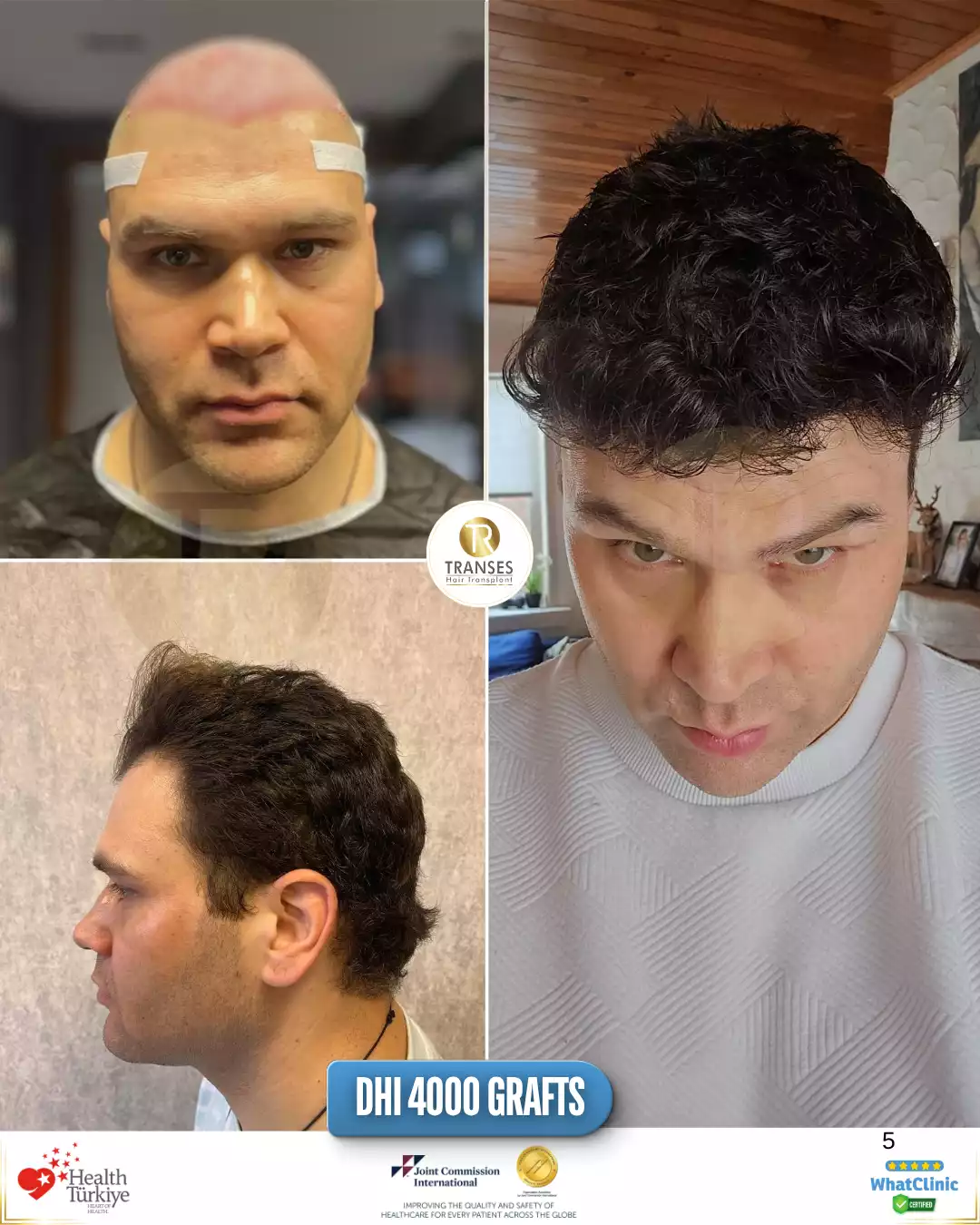
DHI hair transplant begins with a personalized analysis and planning process. In the first stage, the patient's hair loss level, donor area strength, hair shaft quality, and the needs of the area to be transplanted are evaluated. This analysis determines whether the DHI method is suitable for the patient.
First, the hairline is designed. The hairline is one of the most important aesthetic stages of a hair transplant, because a natural appearance largely depends on correct hairline planning. The hairline must suit the person's age, facial shape, degree of forehead baldness, existing hair structure, and natural hair growth direction.
Next, healthy hair follicles are extracted one by one from the donor area using the FUE method. The donor area is usually the back of the head, since the hair follicles in this area are genetically more resistant to shedding, which is why they are preferred for hair transplantation.
The extracted grafts are preserved under special solutions and suitable conditions. Keeping the grafts viable is critical to the success of the hair transplant. In DHI hair transplant, preparing the grafts and loading them into the implanter pens requires care and experience.
In the final stage, hair follicles are placed into the recipient area with the help of implanter pens. At this stage, the angle, direction, and depth of each graft are planned. The use of single-hair grafts along the front hairline in particular is important for achieving a natural, soft appearance.
In DHI hair transplant, the operation plan focuses not only on transplanting the hair follicles, but on placing them in harmony with the natural hair structure.
The implanter pens used in the DHI method help place hair follicles into the recipient area in a controlled way. Thanks to these pens, grafts are transferred to the target area according to a predetermined angle and depth.
Correct use of the implanter pens is important. Placing hair follicles too deep or too close to the surface can negatively affect the result. Similarly, transplantation at the wrong angle can cause hair to grow in an unnatural direction.
For this reason, the experience of the team performing the procedure is just as decisive as the equipment used in the DHI method. In a hair transplant, the issue is not only the device itself, but who uses it and how. After all, having the pen in hand doesn't write the story on its own — it's the skilled hand behind it that does.
DHI hair transplant is a method that can offer a particular advantage in hairline design. The front hairline is the most visible and most critical area of a hair transplant. A small mistake made in this area can make the entire result look artificial.
A natural hairline should not be a completely straight, hard, or symmetrical line. A real hairline is one that suits the person's facial features, is slightly irregular, has soft transitions, and is in harmony with the natural hair direction.
In the DHI method, the grafts placed along the front hairline are carefully selected. Single-hair grafts are usually preferred along the front line, while double or triple grafts may be used further back to increase the perception of density. This distribution helps the hair look natural.
At Transes, when designing the hairline, the patient's age, facial proportions, existing hair structure, and possible future hair loss are evaluated together. A hairline that is designed too low and too aggressively may look attractive in the short term, but can create an unnatural appearance in the long run.
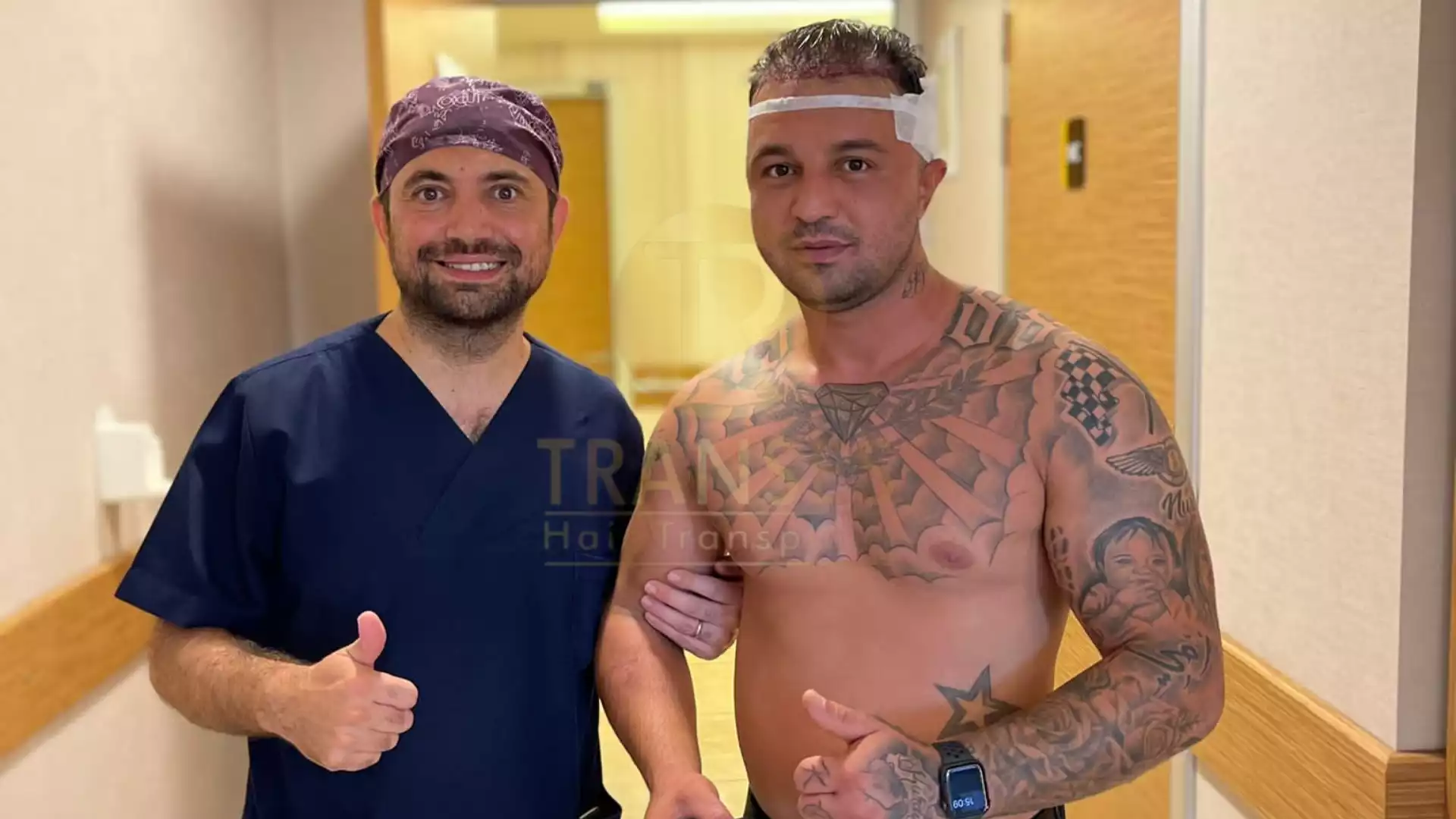
DHI hair transplant can offer many advantages when applied to the right patient with the right planning. It is a technique that particularly stands out in areas requiring detailed placement. This method can offer an advantage especially in the following points:
However, the advantages of the DHI method do not appear the same way in every patient. For example, using DHI alone in a patient with extensive baldness may prolong the operation time or make density planning more difficult. In such cases, Sapphire FUE or Hybrid hair transplant may be more suitable.
DHI hair transplant can be a suitable option especially for patients who need precise transplantation planning in specific areas. However, suitability must always be determined after a hair analysis and donor area evaluation. DHI hair transplant can be considered for the following people:
DHI hair transplant may not be the ideal option on its own for patients with very extensive baldness or a weak donor area. In such cases, planning together with different techniques may be carried out.
The DHI method can be considered for some female patients. It can offer an advantage particularly in cases requiring hairline adjustment, temple area recession, regional thinning, or densification between existing hair.
Hair loss in women must be evaluated differently from men. In female patients, hair loss usually progresses as general thinning rather than fully bald areas. For this reason, not every female patient may be suitable for a hair transplant.
Before the operation, the cause of the hair loss, donor area strength, existing hair density, and type of hair loss must be carefully analyzed. For some female patients, medical treatment, supportive applications, or a different plan may be more appropriate.
At Transes, when planning hair transplants for women, privacy, natural appearance, and the protection of existing hair are given priority.
DHI and Sapphire FUE are two different approaches used in hair transplantation. In both methods, hair follicles are usually extracted one by one from the donor area using the FUE technique. The main difference is how the hair follicles are placed into the recipient area.
In the Sapphire FUE method, micro-channels are opened first with sapphire tips, and grafts are then placed into these channels. This method is a strong option especially in terms of channel-opening precision and density planning in larger areas.
In the DHI method, grafts are placed directly into the recipient area with the help of special implanter pens. This technique can offer an advantage especially in the hairline, densification, and areas requiring transplantation between existing hair.
In short, Sapphire FUE can be strong for larger area planning, while DHI may be preferred for areas requiring more detailed and precise placement. However, the most accurate method should be determined according to the patient's hair loss type and donor area condition.
DHI hair transplant is a single hair transplant technique on its own. Hybrid hair transplant, on the other hand, is a personalized approach in which more than one technique can be used together within the same operation plan.
For example, in one patient, DHI may be preferred for the front hairline, while Sapphire FUE is used for the mid-scalp and crown area. In this case, the procedure performed can be planned as a Hybrid hair transplant.
While DHI offers the advantage of precise placement in specific areas, Hybrid hair transplant aims to meet the different needs of different areas within the same plan.
For this reason, DHI and Hybrid are not competitors, but approaches that can complement each other in the right patient.
DHI hair transplant can be planned with a partial shave or a more limited shave in certain areas for some patients. This can be particularly important for female patients or people who want to preserve the appearance of their existing hair.
However, a non-shave or partial-shave hair transplant is not suitable for every patient. If the area of baldness is large, if a high number of grafts needs to be taken from the donor area, or if the operation area needs to be clearly visible, a shaved plan may be healthier.
The request for a non-shave procedure should not take priority over the quality of the operation. The main goal of a hair transplant is to achieve a natural and successful long-term result after the procedure. For this reason, the shaving plan should be determined according to the patient's hair structure, the transplant area, and the graft requirement.
Mild redness, scabbing, sensitivity, and swelling may be seen in the transplanted area during the first days after DHI hair transplant. These symptoms are part of the natural recovery process expected after a hair transplant.
The first wash is usually carried out under clinic guidance. The patient is given detailed information about hair washing, sleeping position, protecting the transplanted area, medication use, and the process of returning to daily life.
Temporary shedding may be experienced in the transplanted hair during the first weeks. This process is known as shock loss and is a normal part of the hair transplant process. During this period, even if the hair strands shed, the hair follicles remain under the skin and prepare for a new growth cycle.
New hair growth usually begins from the third month onward. The increase in density becomes more noticeable after the sixth month. The settling of the final result is completed in most patients between 12 and 18 months.
For the recovery process to progress healthily after DHI hair transplant, it is very important for the patient to follow the care instructions. The post-operative process affects the result just as much as the operation itself.
The hair follicles used in DHI hair transplant are usually taken from the donor area, which is resistant to shedding. For this reason, with the right donor area selection, healthy graft extraction, and successful placement, the transplanted hair is expected to be permanent in the long term.
However, a hair transplant does not completely stop existing hair loss. Natural hair that has not been transplanted may continue to thin over time. For this reason, a good hair transplant plan should be made not only to cover today's baldness, but also with consideration for the possibility of hair loss in the coming years.
Careful use of the donor area is especially important in DHI hair transplant, because the donor area is not unlimited. Taking more grafts than necessary can cause thinning in the donor area in the future or make a second operation more difficult.
At Transes, when hair transplant planning is carried out, both today's aesthetic goal and the long-term safety of the donor area are evaluated together.
A natural appearance in DHI hair transplant is not achieved simply by using an implanter pen. The real factors that determine naturalness are hairline design, correct graft selection, hair growth direction, transplantation angle, density distribution, and harmony with existing hair. The following points should be given particular attention for a natural appearance:
At Transes, when planning DHI hair transplant, the goal is to achieve a result that does not look artificial from the outside and is in harmony with the patient's face and existing hair character.
Before DHI hair transplant, the patient's general health condition, hair loss type, and donor area capacity should be evaluated. Medications used, chronic conditions, scalp problems, and any previous operations must always be shared with the expert team.
In the period before the operation, it may be necessary to follow clinic instructions regarding smoking, alcohol, blood-thinning medications, and certain supplements. This process is important for the operation to proceed safely and in a controlled manner.
In addition, the patient's expectations should be realistic. DHI hair transplant can offer natural and successful results in a suitable patient; however, donor area capacity, hair shaft quality, and degree of baldness directly affect the result.
A good result in hair transplantation begins with correctly managed expectations.
At Transes Hair Transplant Clinic, DHI hair transplant is treated not just as a technical procedure, but as a personalized aesthetic and medical planning process. For each patient, the hairline, graft distribution, donor area use, transplantation technique, and post-operative follow-up are all planned separately.
What determines the right result in the DHI method is not simply the use of an implanter pen. The real difference lies in correctly determining in which patient, in which area, and how this technique should be applied.
At Transes, our goal is to offer a natural hairline, balanced density, strong donor area management, and long-term satisfaction. All stages, from the pre-operative evaluation to the post-operative aftercare process, are carried out in a controlled manner.
A good result in hair transplantation is the combination of accurate analysis, careful graft preservation, natural angle planning, experienced application, and a regular follow-up process. DHI is a powerful technique that supports this process, but real success comes from correct planning.
Hair loss level, donor strength, and hairline shape are evaluated to confirm DHI is the right fit.
Grafts are extracted and placed directly with implanter pens under local anesthesia, with full angle and depth control.
Aftercare guidance, monitoring of new growth, and settled results within 12 to 18 months.
DHI hair transplant is a hair transplant method in which hair follicles are taken from the donor area and placed directly into the recipient area with the help of special implanter pens. This technique offers precise work, especially in terms of controlling angle, direction, and depth.
No. DHI hair transplant may not be suitable for every patient. It can be suitable for small and medium-sized areas of baldness, hairline design, or densification procedures. Sapphire FUE or Hybrid hair transplant may be a more accurate option for larger areas of baldness.
The procedure is performed under local anesthesia. For this reason, the feeling of pain during the operation is at a minimum level. Mild sensitivity, tightness, or swelling may be seen in the first days.
In Sapphire FUE, micro-channels are opened first with sapphire tips, and grafts are then placed. In the DHI method, grafts are placed directly into the recipient area with the help of implanter pens. Which method is more suitable is determined according to the patient's hair loss type.
In some patients, DHI can be planned with a partial shave or a more limited shave. However, this is not suitable for every patient. The final decision is made according to hair structure, degree of baldness, and graft requirement.
Yes, DHI hair transplant can be considered for female patients in suitable cases. It may be preferred especially for hairline adjustment, the temple area, or situations requiring densification between existing hair.
The DHI method can support density planning in specific areas. However, the density achieved depends on donor area capacity, hair shaft quality, and the size of the area being transplanted.
New hair growth usually begins from the third month onward. A visible increase in density occurs after the sixth month. The settling of the final result is completed in most patients between 12 and 18 months.
Since the transplanted hair follicles are usually taken from a donor area resistant to shedding, long-term growth is expected. However, shedding may continue over time in the existing natural hair. For this reason, long-term planning is important.
The number of grafts required varies according to the area of baldness, donor capacity, hair shaft thickness, and targeted density. Photo evaluation or an in-person examination is needed for precise graft planning.
To find out whether you are suitable for a DHI hair transplant, you can share your hair photos with our expert team. After your front, top, right, left, and donor area photos are evaluated, a personalized graft plan, technique selection, and method recommendation will be prepared for you.
At Transes Hair Transplant Clinic, the goal is not to apply the same method to every patient, but to prepare the hair transplant plan best suited to the person's hair structure, expectations, and long-term likelihood of hair loss.

Leave your information for solutions tailored to your needs.


 Türkçe
 Deutsch
 Русский
 Français
 Español
 العربية
 Polski
 Italiano
 Română
 Svenska
 Afrikaans
 Português
 Shqip
Shqip 日本語
日本語