
Women's hair transplant is a precise hair restoration procedure planned for women experiencing hair thinning, hairline recession, regional hair loss, or permanent balding. Compared to male-pattern hair loss, hair loss in women can progress differently. For this reason, hair transplant for women should not be treated like a standard hair transplant operation, but as a specialized process that requires detailed analysis and personalized planning.
At Transes Hair Transplant Clinic, the women's hair transplant process is planned by evaluating the cause of hair loss, donor area capacity, hair shaft thickness, existing hair density, hairline structure, hormonal status, age, and the likelihood of long-term hair loss. Successful hair transplantation for women requires an understanding of both the affected area and the underlying cause of hair loss. It is not only the area of baldness that must be understood correctly, but also the underlying cause of the hair loss.
The goal in women's hair transplant is not simply to transplant hair, but to achieve a natural, soft appearance that suits feminine facial features and blends seamlessly with existing hair. In this process, privacy, clear communication, realistic expectations, and post-operative follow-up are of great importance.
Women's hair transplant is the procedure of placing healthy hair follicles taken from the donor area into areas experiencing hair loss or thinning. The donor area is usually the back of the head. The hair follicles in this area are preferred for hair transplantation because they are more resistant to shedding.
Hair loss in women often does not progress in the form of completely bald areas, as it typically does in men. Instead, it may appear as general thinning, widening of the hair parting, temple recession, hairline recession, or density loss in specific areas.
For this reason, the type of hair loss must be carefully evaluated before a women's hair transplant. Not every case of hair thinning is suitable for a hair transplant. In some cases, medical treatment, supportive care, or a different approach may be more appropriate.
Here is the key point: a hair transplant for women should not be performed without correct patient selection. A hair transplant performed on the wrong case may not achieve the expected density and can risk damaging existing hair. A hair transplant is a great solution, but it is not a magic key that opens every door — the right lock needs the right key.


Women's hair transplant begins with a detailed evaluation. In the first stage, the patient's hair loss history, how long the hair loss has been ongoing, whether it is still active, family history, medications used, past illnesses, and hair care habits are assessed.
Next, an analysis of the scalp and donor area is carried out. The strength of the donor area, hair shaft thickness, graft quality, and the needs of the area to be transplanted are examined. Donor area evaluation is very important in women, because some types of female hair loss can also cause thinning in the donor region. If the donor area is not strong enough, a hair transplant may not be the right option.
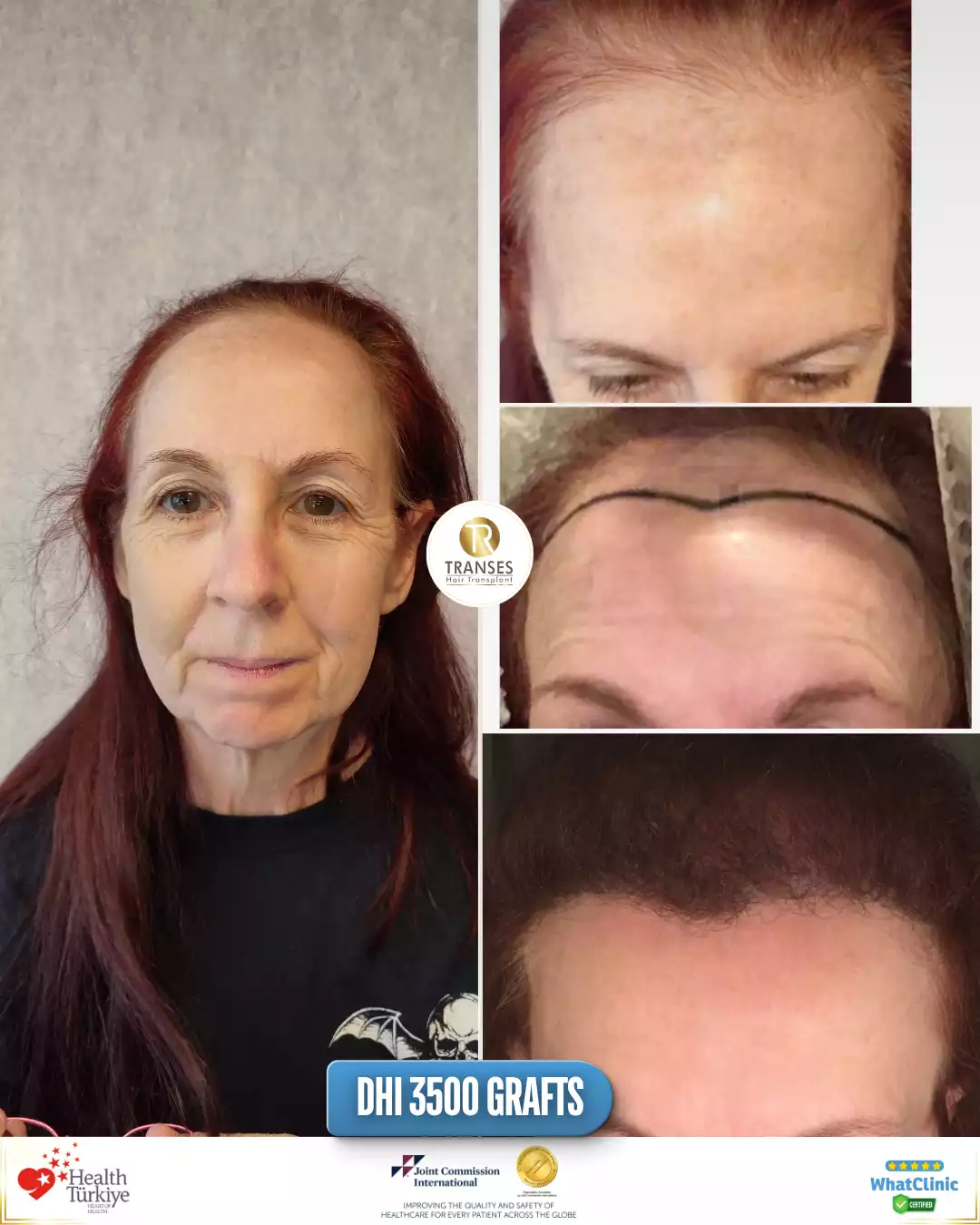
In the initial planning stage, the hairline or the area where density will be increased is determined. Hairline design in women differs from that in men. A softer, more natural line that suits the facial features is the target. A hairline that is too hard, straight, or artificial-looking may not appear natural on a woman's face.
Healthy hair follicles are extracted one by one from the donor area using the FUE method. The extracted grafts are preserved under special conditions. Keeping the grafts viable is critical to the success of the operation.
Depending on the area to be transplanted, DHI, Sapphire FUE, or Hybrid hair transplant may be preferred. If densification is needed between existing hair, the DHI method may offer an advantage in some patients. For larger areas, Sapphire FUE or a combined approach may be considered.
In the final stage, grafts are placed according to the natural hair direction, existing hair density, and the planned design. The goal in women is to ensure that the transplanted hair blends with existing hair without being noticeable.
Hair loss in women can be linked to more complex causes than male-pattern hair loss. While hair loss in men usually progresses in a specific pattern, in women it can appear in a more widespread or scattered manner.
The causes of hair loss in women can include genetic factors, hormonal changes, the postpartum period, stress, iron or vitamin deficiencies, thyroid problems, intense dieting, certain medications, hair styling habits, and traction alopecia.
For this reason, the cause of hair loss must always be evaluated before deciding on a hair transplant for a woman. If the hair loss is actively continuing, or if there is an underlying medical cause, it may first need to be brought under control. The main points to consider in female hair loss are as follows:
Women's hair transplant can be a very powerful solution in the right case. However, if the right case is not selected, the result may not meet expectations.
Women's hair transplant can be considered for patients with a strong donor area, hair loss concentrated in specific areas, and a hair loss type suitable for the operation. The decision on suitability must always be made after a detailed hair analysis. Women's hair transplant may be suitable for the following people:
However, not every woman is a suitable candidate for a hair transplant. A detailed evaluation is required first, especially for patients with widespread hair thinning, a weak donor area, or hair loss that is actively ongoing.
Women's hair transplant can be a powerful solution, but it is not the right option for every patient. In some cases, the operation may be postponed, or different treatment approaches may be recommended. Women's hair transplant may not be suitable in the following situations:
This evaluation is not done to disqualify the patient, but to plan the right treatment at the right time. In hair transplantation, the best decision is sometimes not to operate immediately, but to prepare the ground first.
Women's hair transplant can be applied to different areas. However, planning must be done separately for each area, because in women, the natural appearance of the hair, the softness of the hairline, and harmony with existing hair are especially important. Women's hair transplant is most commonly considered for the following areas:
Hairline design for women requires a more delicate aesthetic approach. Unlike a male hairline, a rounder, softer design that suits the facial features should be the goal. For densification procedures along the hair parting and between existing hair, careful work is required to avoid damaging existing hair follicles.
Hairline design is one of the most important aesthetic stages of the operation for women, because the hairline directly affects facial expression, forehead proportion, and overall appearance.
A natural female hairline should not look too straight, hard, or sharp. The design should have soft transitions, suit facial proportions, be in harmony with the natural hair direction, and be appropriate for the person's age. The following factors are taken into account when planning the hairline:
A hairline designed too far forward may look attractive in the short term but can create an unnatural appearance in the long term. For this reason, hairline planning for women should be as strategic as it is aesthetic. At Transes, the goal is to create a soft, natural hairline that suits the patient's facial features.
One of the questions most frequently asked by female patients is about non-shave hair transplant. For some female patients, a non-shave or partial-shave hair transplant can be planned. This can be especially important for patients who want to return to social life quickly or who want to preserve the appearance of their hair.
However, non-shave hair transplant is not suitable for every patient. If the area to be transplanted is large, if a high number of grafts is required, or if the operation area needs to be clearly visible, a shaved or partially shaved plan may be more appropriate.
The request for a non-shave procedure should not take priority over the quality of the operation. The main goal in a hair transplant is to achieve a natural, successful, long-term result. For this reason, the shaving plan should be determined according to the patient's hair structure, degree of baldness, graft requirement, and the technique to be used.
For some women, the procedure can be performed by shaving only a small portion of the donor area. This area can be camouflaged with existing hair. However, the final decision should be made after an examination or photo evaluation.
The technique used in a women's hair transplant is determined according to the patient's type of hair loss, the size of the area to be transplanted, existing hair density, and the condition of the donor area.
The DHI method may be preferred in some female patients. DHI can offer an advantage particularly in areas requiring densification between existing hair or in hairline design, because in this method grafts are placed directly with special implanter pens.
For larger areas, Sapphire FUE or Hybrid hair transplant may be considered. Sapphire FUE can be an effective option for channel angle and density planning thanks to the micro-channels opened with sapphire tips.
Hybrid hair transplant, on the other hand, is a personalized approach in which different techniques are used together in different areas. For example, DHI may be preferred for the front hairline, while Sapphire FUE is used for larger areas.
The best technique is not the same for every woman. The most accurate technique should be determined after a hair analysis and an evaluation of expectations.
Women's hair transplant, when applied to the right patient with the right planning, can provide a powerful contribution both aesthetically and psychologically. Hair has a significant impact on facial expression and self-confidence in women. Women's hair transplant can provide the following advantages:
However, the advantages vary from patient to patient. Donor area capacity, hair shaft thickness, type of hair loss, and the recovery process all directly affect the result.
A detailed evaluation before a women's hair transplant is essential. The patient should share with the expert team how long the hair loss has been ongoing, whether it is increasing, any previous treatments received, medications used, and any existing medical conditions. The points to pay attention to before the operation are as follows:
When planning a women's hair transplant, decisions should never be rushed. The right analysis must always come before the right technique — reversing that order might make for a nice-sounding plan on paper, but it fails as an actual operation plan, and that is not the direction we take.
The recovery process after women's hair transplant may vary depending on the technique used, the area transplanted, and the patient's individual healing speed. Mild redness, scabbing, sensitivity, or swelling may be seen in the transplanted area during the first days. These are expected, natural processes following a hair transplant.
The first wash is usually carried out under clinic guidance. The patient is given detailed information about hair washing, sleeping position, protecting the transplanted area, medication use, and the process of returning to daily life.
For female patients, protecting existing hair and camouflaging the transplanted area can also be important. For this reason, post-operative care recommendations are explained according to the person's hair structure.
Temporary shedding may be seen in the transplanted hair during the first weeks. This process is known as shock loss and is a normal part of the hair transplant process. Even if the hair strands shed, the hair follicles remain under the skin and prepare for a new growth cycle.
New hair growth usually begins from the third month onward. Visible change increases after the sixth month. The settling of the final result is completed in most patients between 12 and 18 months.
Being patient after a women's hair transplant is important, because the result does not appear overnight. A hair transplant is a bit like farming: you plant correctly, you care for it properly, and then you wait patiently for it to grow.
The hair follicles used in women's hair transplant are usually taken from the donor area, which is more resistant to shedding. With the right donor area selection, healthy graft extraction, and successful placement, the transplanted hair is expected to grow permanently in the long term.
However, a hair transplant does not completely stop existing hair loss. Natural hair that has not been transplanted may continue to thin over time. For this reason, the likelihood of long-term hair loss must be taken into account when planning a women's hair transplant.
Protecting existing hair and, if necessary, planning supportive treatments is especially important in female-pattern hair loss. A hair transplant should be considered part of an overall hair health plan.
At Transes, when planning a women's hair transplant, not only today's area of baldness but also potential future hair loss, donor area safety, and natural appearance are evaluated together.
A natural appearance is one of the most critical goals of hair transplantation in women. A female hairline requires softer and finer aesthetic detail than a male hairline. For this reason, the hairline, graft distribution, and hair direction must be carefully planned. The following factors are important for a natural look:
At Transes, the goal is to achieve a result that is not obviously identifiable as a hair transplant from the outside, and that is in harmony with the patient's face and existing hair structure.
The post-operative care process is very important for the quality of the result in women's hair transplant. In the early period after the operation, the transplanted area should be protected, no pressure should be applied to the scalp, and the instructions given by the clinic should be carefully followed. The main points to pay attention to are as follows:
The psychological process after the operation is also important for female patients. Patients may feel anxious during the shock loss period. It should be explained in advance that this process is normal, and the patient should be followed up with regularly.
Hair transplantation in women and men is based on the same basic principle: healthy hair follicles are taken from the donor area and placed into the area in need. However, there are important differences in terms of planning.
In men, hair loss usually progresses in more distinct patterns. Hairline recession, crown balding, and general areas of baldness can be more clearly defined. In women, hair loss may appear as more widespread thinning, a widening hair parting, or regional density loss.
Planning a women's hair transplant requires protecting existing hair, designing a softer hairline, planning the shaving approach more carefully, and carrying out the privacy process with particular attention.
In addition, because the cause of hair loss in women can depend on more variables, the pre-operative evaluation becomes even more critical.
At Transes Hair Transplant Clinic, women's hair transplant is treated not simply as a technical procedure, but as a personalized, sensitive, and privacy-focused hair restoration process. Each patient's cause of hair loss, donor area strength, hairline structure, existing hair density, and aesthetic expectations are evaluated separately.
What determines the right result in women's hair transplant is not simply the number of grafts. The real difference lies in correct patient selection, natural hairline design, protection of existing hair, careful use of the donor area, and a regular post-operative follow-up process.
At Transes, our goal is to achieve results for female patients that are natural, soft, in harmony with their facial features, and provide long-term satisfaction. All stages, from pre-operative analysis to post-operative aftercare, are carefully planned.
A good result in hair transplantation is the combination of accurate analysis, strong donor management, careful graft preservation, natural angle planning, and a regular follow-up process. Women's hair transplant requires particular sensitivity, and every detail matters.
Cause of hair loss, donor strength, and a softer hairline design are evaluated together.
DHI, Sapphire FUE, or Hybrid techniques are applied to blend seamlessly with existing hair.
Private, attentive aftercare and settled, natural results within 12 to 18 months.
Yes, women can have a hair transplant in suitable cases. However, because hair loss in women is evaluated differently from men, a detailed hair analysis must be carried out before the operation.
No. A hair transplant may not be suitable for patients with a weak donor area, widespread hair thinning, or hair loss that is actively progressing. Suitability is determined through a personalized evaluation.
A non-shave or partial-shave hair transplant can be planned for some female patients. However, this is not suitable for everyone. The decision is made according to the area of baldness, graft requirement, and hair structure.
The procedure is performed under local anesthesia. For this reason, the feeling of pain during the operation is at a minimum level. Mild sensitivity, tightness, or swelling may be seen in the first days.
DHI, Sapphire FUE, or Hybrid hair transplant can be considered depending on the patient's needs. DHI may offer an advantage in some patients when densification is needed between existing hair.
Yes. Temporary shedding of the transplanted hair can occur after a hair transplant. This process is known as shock loss and is generally considered a normal part of the procedure.
New hair growth usually begins from the third month onward. Visible change increases after the sixth month. The settling of the final result is completed in most patients between 12 and 18 months.
The transplanted hair follicles are usually taken from a donor area resistant to shedding. For this reason, long-term growth is expected. However, shedding may continue over time in the existing natural hair.
With correct planning and careful application, the protection of existing hair is the goal. However, densification procedures require delicate work. For this reason, an experienced team and the right choice of technique are important.
A natural appearance can be targeted when correct hairline design, suitable graft distribution, natural hair direction, and harmony with existing hair are achieved.
The number of grafts required varies according to the area of baldness, donor capacity, hair shaft thickness, and targeted density. Photo evaluation or an in-person examination is needed for precise planning.
A certain recovery period must be completed after the operation before hair dye or chemical treatments can be used. Since this period can vary from person to person, it should be managed according to clinic recommendations.
To find out whether you are suitable for a women's hair transplant, you can share your hair photos with our expert team. After your front, top, right, left, and donor area photos are evaluated, a personalized graft plan, technique selection, and hairline recommendation will be prepared for you.
At Transes Hair Transplant Clinic, the goal is not to apply the same method to every patient, but to prepare the hair restoration plan best suited to the person's cause of hair loss, hair structure, donor area capacity, and long-term expectations.

Leave your information for solutions tailored to your needs.


 Türkçe
 Deutsch
 Русский
 Français
 Español
 العربية
 Polski
 Italiano
 Română
 Svenska
 Afrikaans
 Português
 Shqip
Shqip 日本語
日本語