
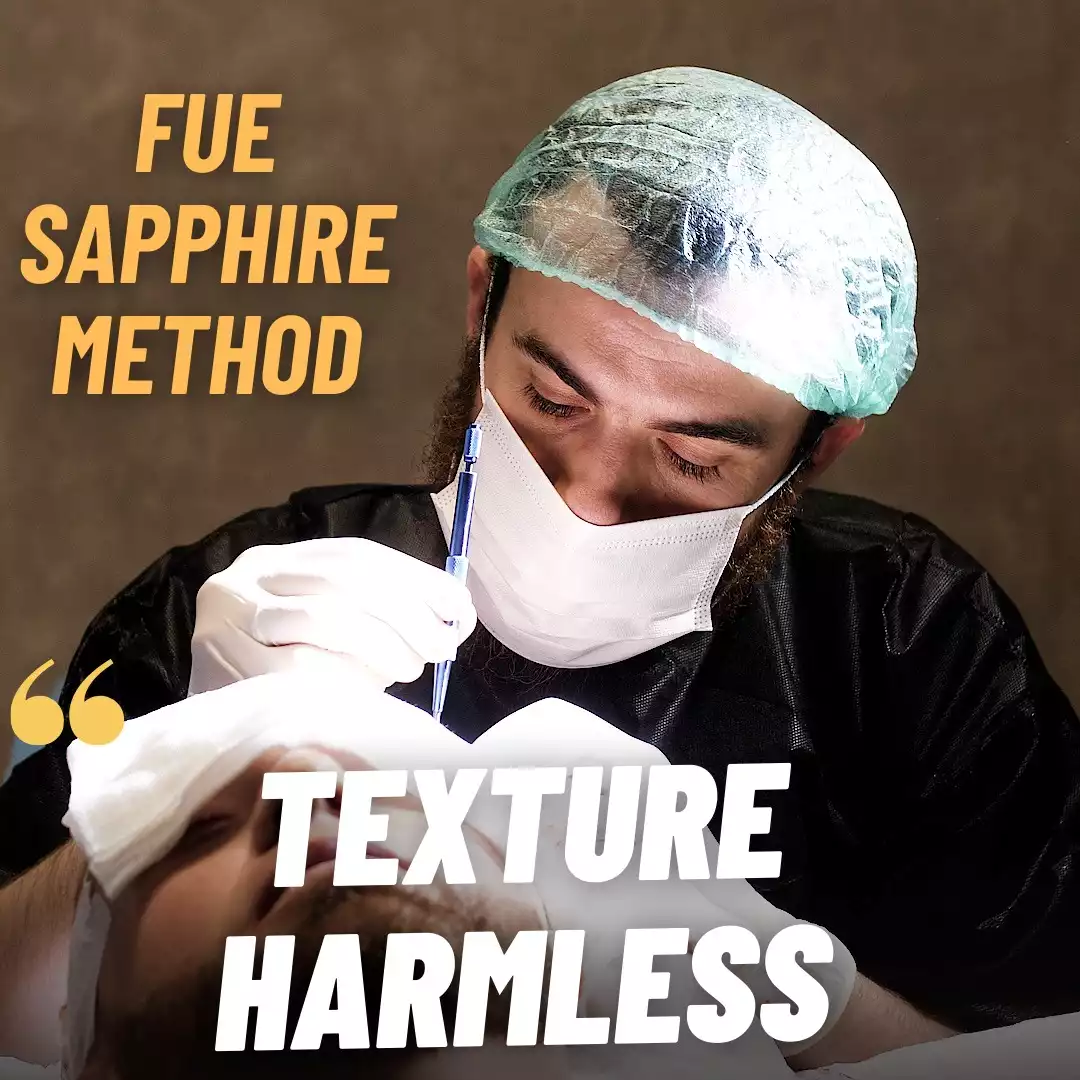
Sapphire FUE hair transplant is a modern technique in which hair follicles are extracted individually from the donor area and implanted into micro-channels opened with sapphire-tipped blades. The goal of this technique goes beyond simply transplanting hair — it is about correctly planning the natural direction of growth, density, and harmony with the patient's facial features.
At Transes Hair Transplant Clinic, the Sapphire FUE process is planned by evaluating the patient's hair loss pattern, donor area capacity, hair shaft thickness, age, and the likelihood of long-term hair loss. A successful hair transplant depends as much on accurate analysis and design as it does on the technique used.
Sapphire FUE is an advanced application of the classic FUE technique. In FUE, hair follicles are typically extracted one by one from the strong donor area at the back of the head. What differentiates Sapphire FUE is that the channels in the recipient area are opened using specialized sapphire-tipped instruments.
The fine, smooth structure of the sapphire tips allows for more controlled channel opening. This makes it possible to prepare recipient sites according to natural hair direction, correct angle, and planned density.
It's important to note: Sapphire FUE is not a miracle method on its own. What truly determines the result is how skillfully the sapphire tip is used — the right angle, the right depth, and the right distribution, applied by an experienced team.
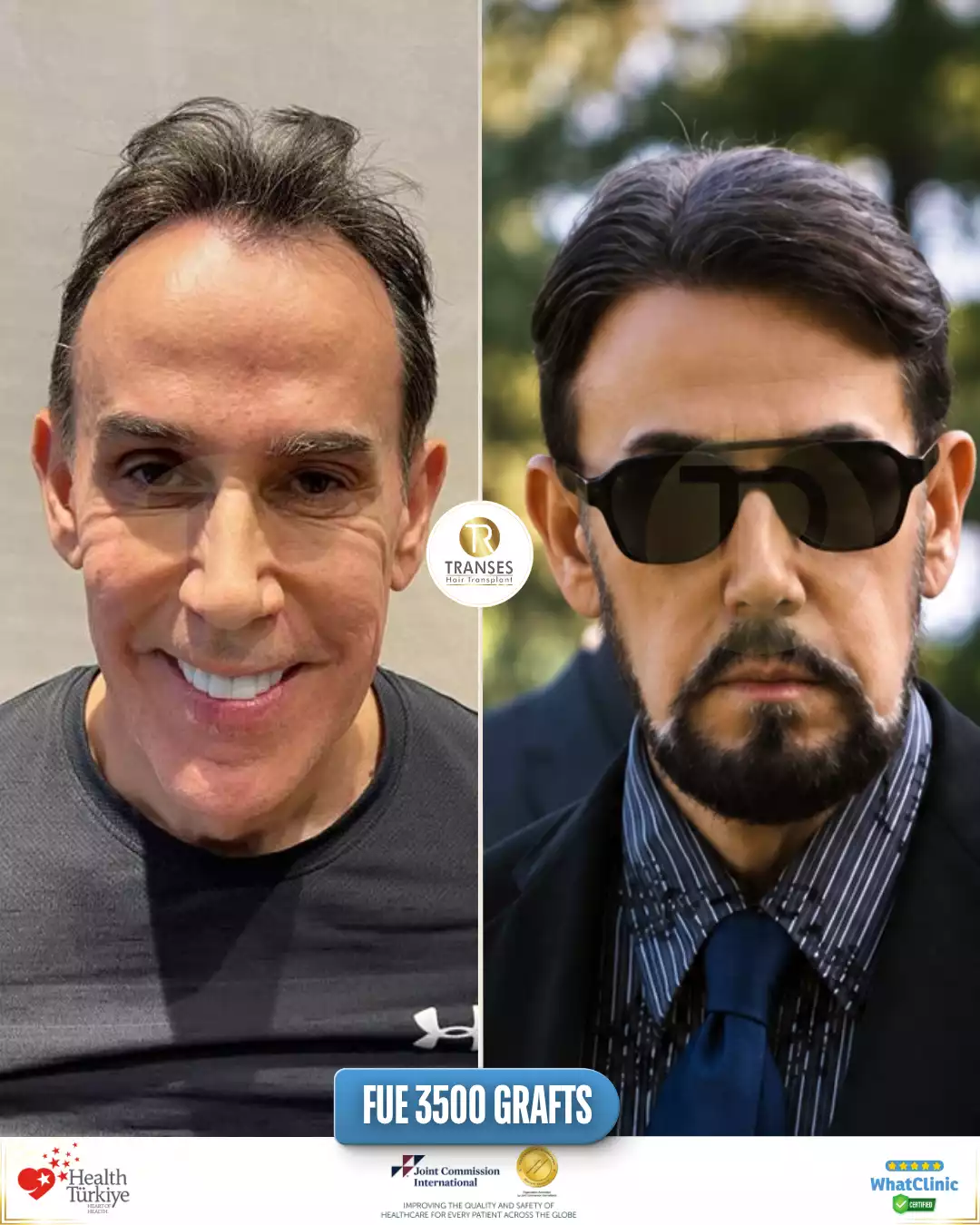
Sapphire FUE hair transplantation begins with a personalized plan. Every patient has a different level of hair loss, donor area strength, and expectations, so a detailed analysis is carried out before the operation.
In the first stage, the hairline is designed. The hairline must suit the patient's facial shape, age, existing hair structure, and natural hair direction. A hairline that is too low, unnatural, or asymmetric compromises the natural look — making hairline design one of the most critical steps of the operation.
Next, healthy hair follicles are extracted one by one from the donor area using the FUE method. The extracted grafts are preserved under special conditions. Micro-channels are then opened in the recipient area using sapphire tips. These channels determine the direction and angle at which the hair will grow.
In the final stage, grafts are carefully placed into the opened channels. The goal here is to achieve both a natural appearance and maximum efficient density based on the available donor capacity.
The most important advantage of the Sapphire FUE method is that it provides high precision during channel opening. Micro-channels opened with sapphire tips help hair follicles to be positioned in a more controlled way. This technique stands out especially in the following points:
However, the best method for every patient is not automatically Sapphire FUE. DHI may be more suitable for some patients, classic FUE for others, and combined techniques for others still. The right decision should be made after examination and hair analysis.
Sapphire FUE is a suitable option especially for patients targeting natural density in the hairline, mid-scalp, and crown areas. People with a strong donor area, a hair loss level suitable for transplantation, and a favorable general health condition may benefit from this method. Sapphire FUE can be considered for the following people:
For patients with a weak donor area, hair loss that is still very actively progressing, or a medical problem present on the scalp, a detailed evaluation must be carried out before the operation. The hair transplant may be postponed, or a different treatment plan may be recommended, when necessary.
Sapphire FUE and DHI are two different approaches used in hair transplantation. In Sapphire FUE, channels are first opened with sapphire tips, and grafts are then placed into these channels. In the DHI method, grafts are placed directly using special implanter pens.
Sapphire FUE can generally be preferred for density planning over larger areas. DHI, on the other hand, can offer an advantage in smaller areas, in densification procedures, or in certain special hairline work.
| Aspect | Sapphire FUE | DHI |
|---|---|---|
| Method | Channels opened with sapphire tips, then grafts placed | Grafts implanted directly with implanter pens |
| Best suited for | Density planning over larger areas | Smaller areas, densification, select hairline work |
The most correct technique is determined according to the patient's hair loss type and targeted result. At Transes, the aim is not to apply a single method to everyone, but to create the most suitable hair transplant plan for each patient.
It is normal to see mild redness, scabbing, and sensitivity in the transplanted area during the first few days after Sapphire FUE. The first wash is usually carried out under clinic guidance, and the post-operative care process is explained to the patient in detail.
Temporary shedding may be seen in the transplanted hair during the first weeks. This process is known as shock loss and is a natural part of the hair transplant process. New hair growth usually begins from the third month onward. Visible change increases after the sixth month. The settling of the final result is completed in most patients between 12 and 18 months.
During this process, it is important for the quality of the result that the patient follows the care instructions, protects the scalp, and stays on schedule for regular follow-ups.
Hair follicles transplanted with Sapphire FUE are usually taken from the donor area, which is resistant to shedding. For this reason, with the right donor area selection and successful graft placement, the transplanted hair is expected to be permanent in the long term.
However, a hair transplant does not completely stop existing hair loss. Shedding may continue over time in non-transplanted areas. For this reason, a good hair transplant plan must take into account not only today, but also the possibility of hair loss in the coming years.
At Transes, when hair transplant planning is carried out, the protection of the donor area, the natural density target, and the long-term appearance are evaluated together.
At Transes Hair Transplant Clinic, Sapphire FUE hair transplantation is treated not just as a technical procedure, but as a personalized aesthetic planning process. For each patient, the hairline, graft distribution, donor area use, and post-operative follow-up are planned separately.
Our aim is not an artificial image that gives the feeling of "a hair transplant was done" when looked at from the outside, but a natural result that is in harmony with the patient's face and hair structure.
A good result in hair transplantation is the combination of accurate analysis, strong donor management, careful graft preservation, correct channel angle, and a regular aftercare process. Sapphire FUE is a powerful technique that supports this process, but the real difference emerges in expert planning.
Hair loss pattern, donor capacity, and hairline design are evaluated before the operation.
Graft extraction, sapphire channel opening, and precise graft placement under local anesthesia.
Aftercare guidance, monitoring of new growth, and long-term results within 12 to 18 months.
The procedure is performed under local anesthesia. For this reason, the feeling of pain during the operation is at a minimum level. Mild sensitivity, tightness, or swelling may be seen in the first days.
Sapphire tips can help with more controlled channel opening. This also supports density planning in suitable patients. However, the density that will be achieved is directly related to donor area capacity and hair shaft quality.
No. The most suitable technique may differ for each patient. A decision should not be made without evaluating donor area strength, hair loss level, age, hair type, and expectations.
The first growth usually starts from the third month onward. Density becomes more pronounced after the sixth month. The final result settles within 12 to 18 months in most patients.
Yes, a natural-looking hairline can be achieved with the right planning. What is decisive here is not only the sapphire tip, but designing the hairline to suit the patient's facial structure, age, and natural hair direction.
To find out whether you are suitable for a Sapphire FUE hair transplant, you can share your hair photos with our expert team. After your front, top, right, left, and donor area photos are evaluated, a personalized graft plan and method recommendation will be prepared for you.

Leave your information for solutions tailored to your needs.


 Türkçe
 Deutsch
 Русский
 Français
 Español
 العربية
 Polski
 Italiano
 Română
 Svenska
 Afrikaans
 Português
 Shqip
Shqip 日本語
日本語