
Beard transplant is a specialized aesthetic procedure performed by transplanting hair follicles into sparse, patchy, uneven, or completely bare beard areas. The goal of this procedure is not simply to increase beard density, but to create a balanced beard appearance that suits the person's facial features and has a natural growth direction.
At Transes Hair Transplant Clinic, the beard transplant process is planned by evaluating the person's facial structure, existing beard density, beard growth direction, donor area capacity, skin structure, and expectations. Because a successful beard transplant is not simply a matter of placing grafts into empty areas — the direction, angle, density, and harmony of the beard with the face must all be correctly calculated.
Beard transplant can be applied to different areas such as the cheeks, chin, mustache, sideburns, and jawline. Since each area has a different natural hair growth direction, the procedure must be planned individually for each patient. Naturalness is extremely critical in a beard — a transplant done at the wrong angle becomes noticeable even faster than it would on the scalp. The face is essentially a storefront, after all — we are not going to hang the sign crooked.
Beard transplant is the procedure of transplanting healthy hair follicles, usually taken from the back of the head, into areas with beard loss or sparseness. The back of the head is most often chosen as the donor area, because the hair follicles there are strong and more resistant to shedding, making them suitable for beard transplantation.
Beard transplant can be considered for people with naturally sparse beards, those with patchy areas in their beard, areas where beard does not grow due to scarring or burns, or men who want a more defined beard line.
The most important point in this procedure is accurately replicating the natural growth direction of the beard hair. Beard hair grows differently from scalp hair. The angle and direction differ across the cheek, chin, mustache, and sideburn areas. For this reason, beard transplant requires an aesthetic planning process separate from hair transplant.
In a successful beard transplant, it should not be obvious from the outside that a transplant has been performed. The goal is to achieve a natural, balanced beard appearance that suits the person's facial features.
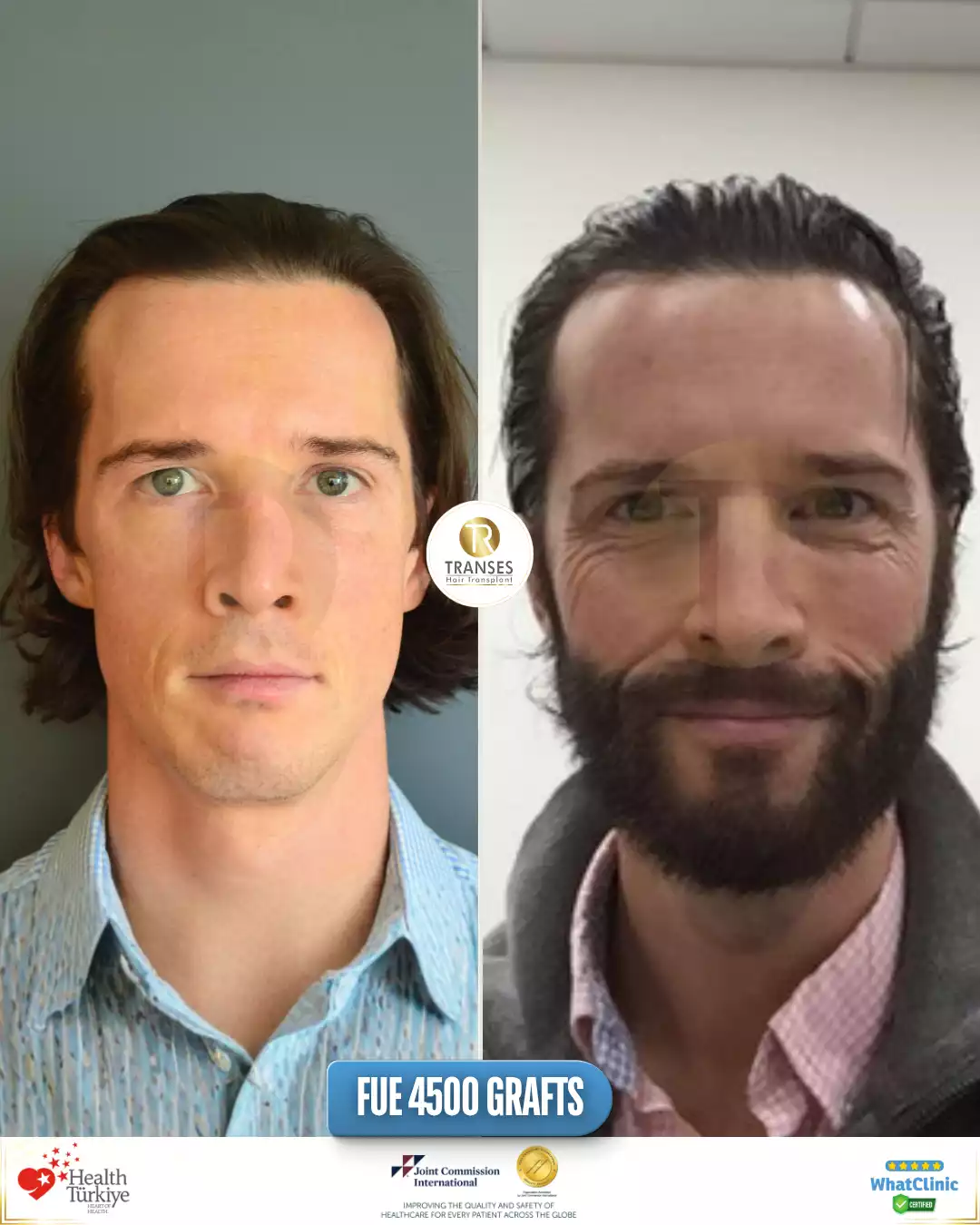
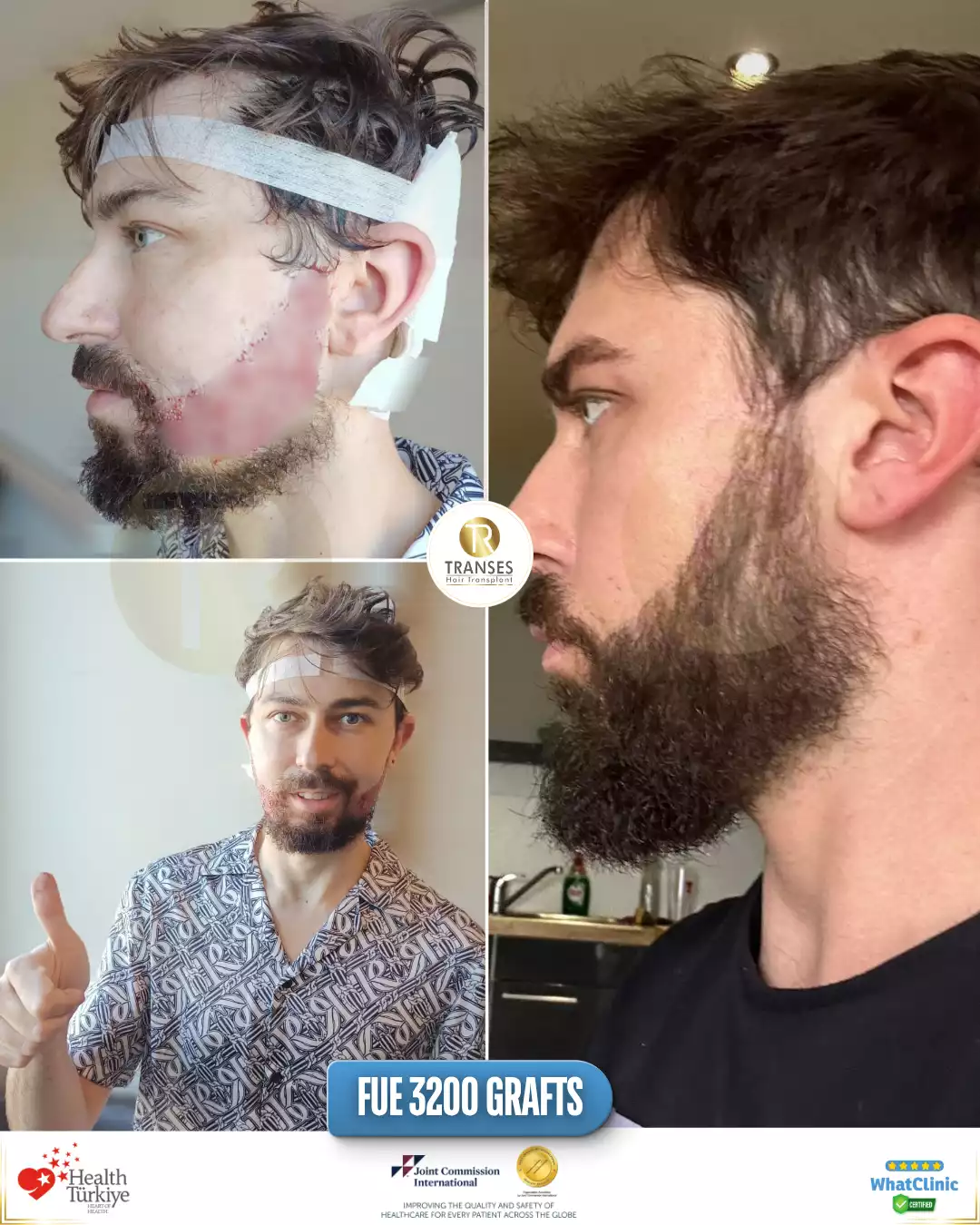
Beard transplant begins with a detailed analysis of the face and beard. In the first stage, the patient's existing beard structure, areas with gaps, beard growth direction, desired density, and donor area capacity are evaluated. This analysis is important for determining how many grafts are needed and how they will be distributed across different areas.
Next, the beard design is created. The beard line, cheek line, jawline, sideburn connection, and mustache area are planned according to the person's facial shape. The same beard form is not applied to every patient — beard design should differ for round, oval, long, or angular face shapes.
Healthy hair follicles are extracted one by one from the donor area using the FUE method. Balanced use of the donor area is important during graft extraction. Taking too many or unevenly distributed grafts can cause thinning in the donor region.
The extracted grafts are preserved under special conditions. Keeping the grafts viable is important for the success of the beard transplant. Next, the correct angle and direction are planned for the area to be transplanted.
In beard transplant, grafts must be placed at a much flatter angle to the skin, because beard hair does not grow upright the way scalp hair does. Angle control is especially critical for a natural appearance in the cheek and jawline areas.
In the final stage, grafts are placed one by one according to the determined plan. The priority is to achieve a result that is consistent with the natural beard direction, balanced with the facial features, and does not look artificial.
Beard transplant can be applied to different areas of the face. However, each area has its own natural growth direction and density structure. For this reason, beard transplant should not be thought of as a single, uniform area. The main areas where beard transplant can be performed are as follows:
The cheek area requires a wider, softer transition. The jawline must be planned more strategically, since it defines the contour of the face. The mustache area is more delicate and visible, which makes graft direction especially important here. The sideburn area is the transition zone between the hair and the beard — a transplant performed here can directly affect the overall balance of the face. For this reason, regional planning is very important in beard transplant.
Beard transplant can be suitable for men who are not satisfied with their beard density, who have gaps in their beard, or who want a more balanced beard appearance on their face. However, the decision on suitability must always be made after a donor area and skin evaluation. Beard transplant can be considered for the following people:
For beard transplant, it is important that the person's general health condition is suitable, the donor area is sufficient, and expectations are realistic. For people with a weak donor area or an active dermatological problem on the skin, a detailed evaluation should be carried out before the operation.
Beard transplant can be an effective solution for many people, but it is not suitable for every patient. In some cases, the operation may be postponed, or a different plan may be recommended. Beard transplant may not be suitable in the following situations:
This evaluation is not carried out to steer the patient away from the operation, but to plan the most accurate and safest result. In beard transplant, correct design and correct patient selection matter more than making a hasty decision.
Beard transplant, when applied with the right planning, can noticeably enhance facial appearance. The beard is an important feature that directly affects the jawline, facial proportions, and overall expression on a man's face. Beard transplant can provide the following advantages:
However, the result achieved depends on donor area capacity, the needs of the beard area, the number of grafts, skin structure, and the recovery process. The goal in beard transplant should be realistic density. The same beard density does not look natural on every face.
Beard design is one of the most critical stages of beard transplant, because the beard is a directly visible part of the face, and a flawed design is noticed immediately.
When designing a beard, the person's face shape, chin structure, cheek line, sideburn connection, mustache structure, and existing beard density are evaluated together. The goal is to create a beard form that supports the facial features and is in harmony with the person's natural appearance.
Some patients may want a very sharp, dense beard line. However, this look may not appear natural on every face. At Transes, when designing a beard, both the patient's expectations and the natural balance of the face are taken into consideration.
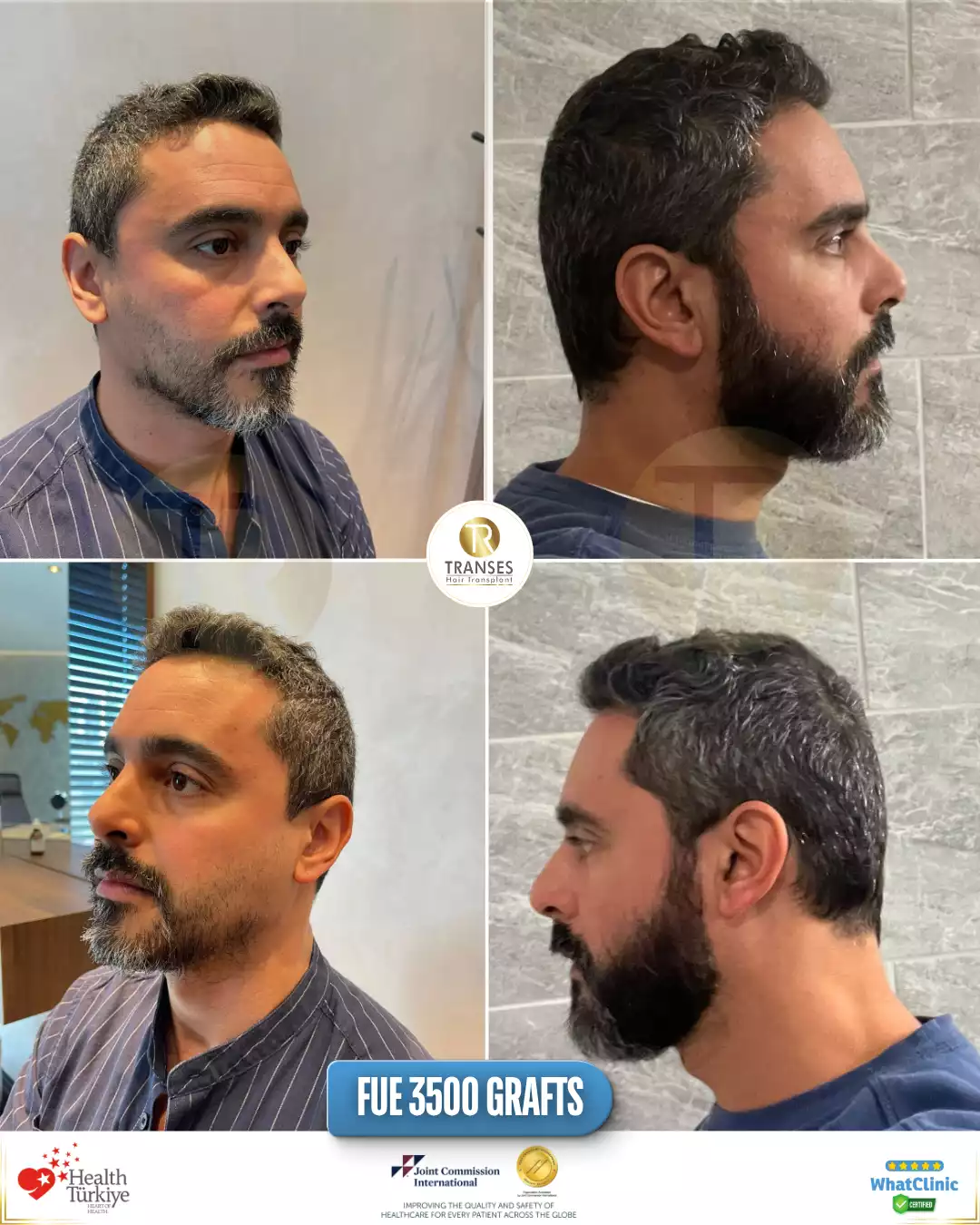
Beard transplant and hair transplant are based on similar principles. In both procedures, healthy hair follicles are taken from the donor area and placed into the area in need. However, there are important differences in application.
In hair transplant, the natural growth direction of the scalp, the hairline, and density planning are the main focus. In beard transplant, the growth direction of the facial hair, skin structure, and aesthetic beard form are more decisive.
Beard hair grows at different angles compared to scalp hair. In particular, hair in the cheek and chin areas grows at a much flatter angle to the skin. For this reason, grafts must be placed at a very precise angle in beard transplant.
In addition, the design in beard transplant is more visible. While some small errors in hair transplant can be camouflaged with a hairstyle, the facial area in beard transplant is constantly on display. For this reason, beard transplant requires detailed aesthetic planning.
Beard transplant and mustache transplant share the same basic principle, but differ in terms of planning. The mustache area is smaller but more visible. For this reason, graft placement, angle, and density planning must be carried out very precisely.
Hair in the mustache area usually grows in a specific direction and in a more orderly pattern. A mustache transplant performed at the wrong angle can create an unnatural appearance. In addition, since the area above the lip directly affects facial expression, the design must be done carefully.
Some patients may only need a mustache transplant. In others, the beard, mustache, and sideburn areas may be planned together. The most accurate approach is determined according to the patient's existing beard structure and expectations.
Redness, small scabs, mild sensitivity, and swelling may be seen in the transplanted area during the first days after beard transplant. These are the natural, expected recovery processes following the procedure.
In the first days, the transplanted area should not be touched, the face should not be rubbed, and the scabs should not be forcibly removed. The first wash and cleaning process should be carried out according to clinic instructions.
Temporary shedding of the transplanted hair may be seen in the first weeks after beard transplant. This process is known as shock loss and is considered normal. The transplanted follicles remain under the skin and prepare for a new growth cycle.
New beard growth usually begins from the third month onward. Density becomes more noticeable after the sixth month. The settling of the final result can take 12 months or longer in most patients.
During the recovery process, skin care, shaving timing, facial cleansing, and protection from external factors are all important. Following the post-operative care instructions can directly affect the quality of the result.
The shaving process after beard transplant must be planned carefully. The grafts in the transplanted area are sensitive during the early period. For this reason, razors, electric shavers, or any harsh contact should be avoided during the first weeks.
The timing of the first shave should be determined according to the patient's recovery process and clinic recommendation. Careful trimming with scissors may generally be suggested in the early period. The transplanted area should be fully healed before using a razor or electric shaver. The points to pay attention to during the shaving process are as follows:
Patience is required after beard transplant. The early period may feel a bit like a "hands-off-your-beard" rule, but it is worth it for the final result.
The hair follicles used in beard transplant are usually taken from a donor area that is resistant to shedding. With the right graft selection, correct-angle placement, and a healthy recovery process, the transplanted follicles are expected to grow permanently in the long term.
After the transplanted follicles are placed in the beard area, they gradually adapt to their new location over time. Temporary shedding may occur in the first months, but once the follicles remain viable, new beard growth begins.
The permanence of a beard transplant is related to donor area quality, graft viability, transplantation technique, skin structure, and post-operative care. For this reason, the aftercare process is just as important as the procedure itself.
At Transes, when planning beard transplant, the goal is not just the initial appearance, but a natural, long-term result.
A natural appearance in beard transplant depends on placing grafts with the correct direction, angle, and density. Since the beard area is different from the scalp, each area must be planned separately. The following factors are important for a natural look:
A natural beard transplant is achieved not by adding as many grafts as possible, but by placing the right graft in the right place. In beard transplant, quality matters more than quantity.
Before beard transplant, the patient's general health condition, skin structure, donor area capacity, and expectations should be evaluated. Medications used, chronic conditions, skin problems, and any previous procedures should be shared with the expert team. The points to pay attention to before the operation are as follows:
The most important issue in beard transplant is finding the right balance between the look the patient wants and a natural design that suits their facial structure.
Early-stage care after beard transplant is very important. Because the transplanted area is on the face, external contact, washing, sleeping position, and shaving timing must all be carefully managed. The main points to pay attention to are as follows:
The more carefully the patient behaves after beard transplant, the more controlled the recovery process will be. The day of the operation matters, but the days that follow are the second half of the game.
At Transes Hair Transplant Clinic, beard transplant is treated not simply as a gap-filling procedure, but as a personalized design process that directly affects facial aesthetics. Each patient's facial structure, existing beard density, donor area capacity, and expectations are evaluated separately.
What determines the right result in beard transplant is not simply the number of grafts. The real difference lies in how the beard line is designed, at what angle the grafts are placed, how the donor area is used, and how the post-operative care process is followed.
At Transes, our goal is to achieve a beard appearance that is in harmony with the patient's facial features, natural, balanced, and provides long-term satisfaction. All stages, from pre-operative analysis to post-operative aftercare, are carefully planned.
A good result in beard transplant is the combination of correct design, careful graft extraction, natural angle planning, strong donor management, and a regular follow-up process.
Facial shape, existing density, growth direction, and donor capacity are evaluated together.
Grafts are extracted and placed at flat, natural angles suited to each facial area.
Careful aftercare guidance and settled, natural results within about 12 months.
Beard transplant is the procedure of placing healthy hair follicles taken from the donor area into sparse, gapped, or bare areas of the face. The goal is to create a natural, balanced beard appearance.
It can be suitable for people with a sparse beard, gaps in their beard, those wanting a more defined beard line, or those with beard loss due to scarring. Suitability is determined after a donor area and skin evaluation.
The procedure is performed under local anesthesia. For this reason, the feeling of pain during the operation is at a minimum level. Mild sensitivity, redness, or tightness may be seen in the first days.
A natural look can be targeted with correct angle, direction, and density planning. Placing grafts according to the natural growth direction in the facial area is very important in beard transplant.
Since the transplanted follicles are usually taken from a donor area resistant to shedding, long-term growth is expected. However, the result depends on graft quality, skin structure, and the care process.
Yes. Temporary shedding of the transplanted hair can occur after beard transplant. This process is considered normal, and new beard growth begins over time.
New beard growth usually begins from the third month onward. Density becomes more noticeable after the sixth month. The settling of the final result can take 12 months or longer in most patients.
The number of grafts required varies according to the width of the beard gaps, the desired density, donor area capacity, and facial design. Photo evaluation or an in-person examination is needed for precise planning.
The timing of the first shave should be determined according to the recovery process. Razors or electric shavers should not be used in the early period. Shaving should proceed according to clinic recommendation.
Yes. The mustache area can also be transplanted. However, since this area is more delicate and visible, angle, direction, and density planning must be carried out with particular care.
In suitable cases, beard transplant can be considered for areas where beard does not grow due to scarring or burns. However, the skin structure and condition of the scar tissue must be analyzed beforehand.
In graft extraction performed with the FUE method, no large surgical incision is made. However, as with any procedure, skin structure, the recovery process, and donor area management can affect the final appearance.
To find out whether you are suitable for a beard transplant, you can share your facial and donor area photos with our expert team. After your cheek, chin, mustache, sideburn, and donor area photos are evaluated, a personalized graft plan, beard design, and method recommendation will be prepared for you.
At Transes Hair Transplant Clinic, the goal is not to apply the same beard design to every patient, but to prepare the beard transplant plan best suited to the person's facial structure, existing beard character, donor area capacity, and long-term expectations.

Leave your information for solutions tailored to your needs.


 Türkçe
 Deutsch
 Русский
 Français
 Español
 العربية
 Polski
 Italiano
 Română
 Svenska
 Afrikaans
 Português
 Shqip
Shqip 日本語
日本語