
Afro hair transplantation is a specialised hair restoration procedure that requires careful planning and expertise in treating patients with Afro-textured hair. Unlike straight or slightly wavy hair, Afro-textured hair often has a curved follicular structure beneath the scalp, requiring a tailored approach to graft extraction and implantation. Particular attention must be given to donor area management, hairline design, recipient site preparation, and the angle and direction of hair growth. These factors are essential for preserving follicle integrity, achieving natural-looking density, and ensuring results that complement each patient's unique hair characteristics.
At Transes Hair Transplant Clinic, the Afro hair transplant process is planned by evaluating the patient's hair type, curl pattern, donor area capacity, hair loss level, scalp condition, and the likelihood of long-term hair loss. Successful Afro hair transplantation requires a clear understanding of the patient’s natural curl pattern and hair follicle structure.
Afro hair type can provide strong visual coverage. The curly structure of the hair strands, when planned correctly, can create a denser appearance. However, this same curly structure can also cause the hair follicles to follow different angles beneath the skin. For this reason, Afro hair transplant is a specialized field that requires experience and technical precision.
Afro hair transplant is a hair transplant procedure performed on people with Afro, curly, or densely curled hair. In this procedure, healthy hair follicles are usually extracted one by one from the donor area at the back of the head and placed into the areas experiencing hair loss.
The main point that distinguishes Afro hair transplant from other hair transplant procedures is the structure of the hair follicles. In Afro hair, the hair strand is not only curly on the outside — the hair follicle itself may also have a curved or curled structure beneath the skin. This requires more careful angle control during graft extraction.
A standard hair transplant approach may not be sufficient for every Afro hair case. Extracting grafts at the wrong angle can damage the hair follicles or increase the risk of graft loss. For this reason, Afro hair transplant requires specialized analysis, careful donor management, and experienced application.
Afro hair transplantation requires more than technical expertise. Achieving natural-looking results involves careful consideration of the hair’s unique curl pattern, follicular structure, hairline design, and overall density distribution. Each of these factors must be evaluated together to ensure that the transplanted hair blends harmoniously with the patient's natural hair characteristics.
At Transes Hair Transplant Clinic, our approach focuses on personalised treatment planning, aesthetic balance, and natural-looking outcomes.
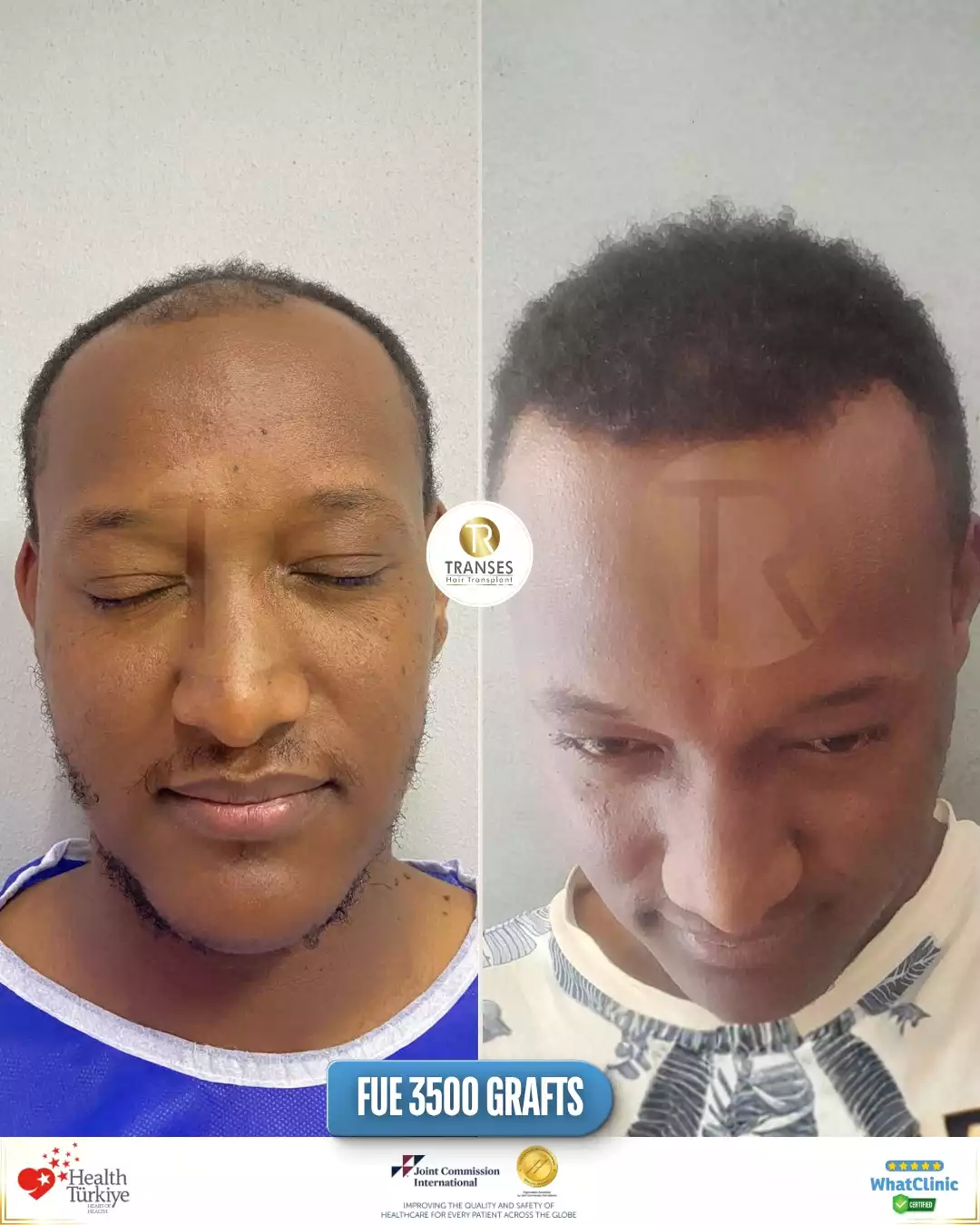
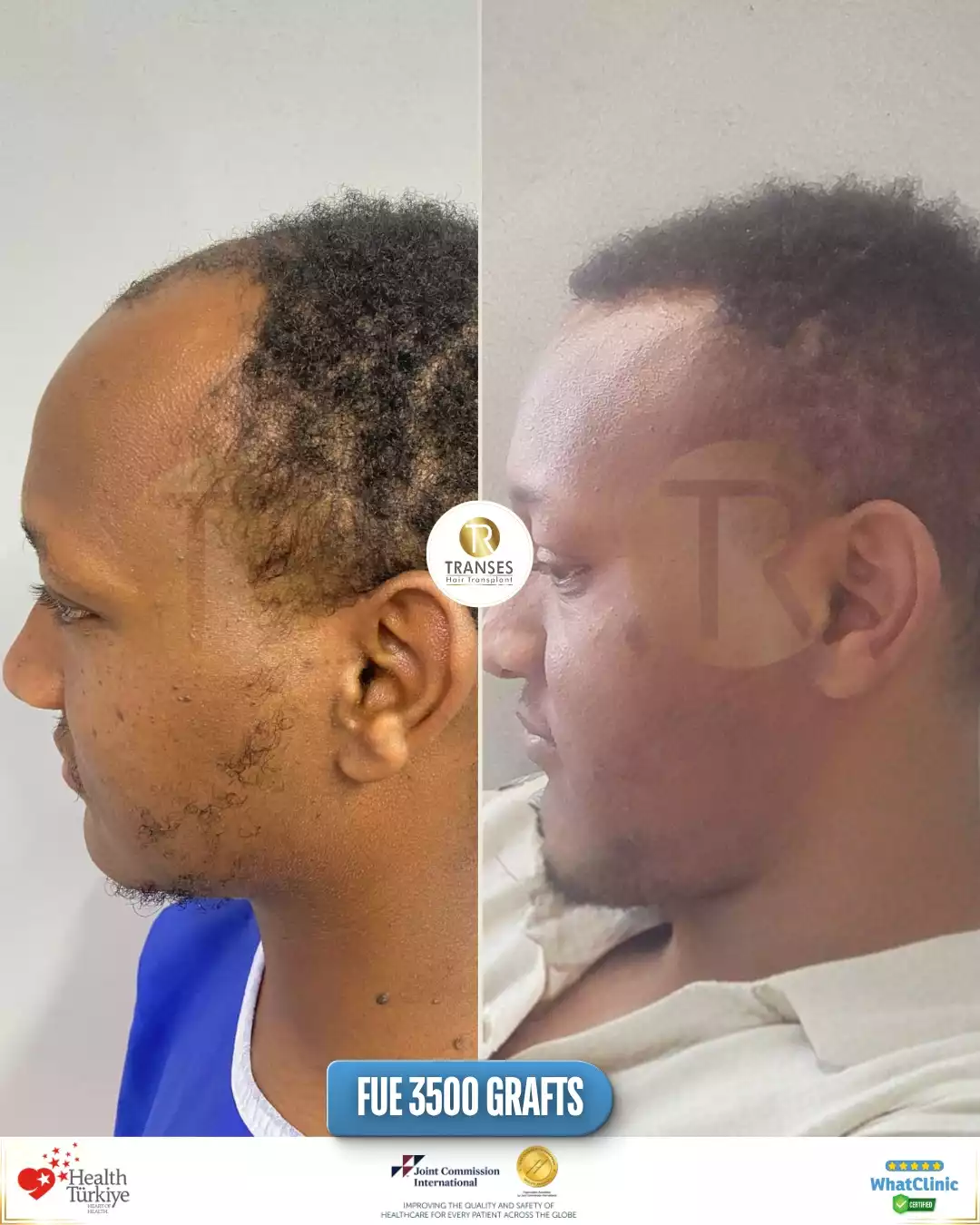
Afro hair transplant begins with a detailed hair analysis. In the first stage, the patient's hair loss type, degree of baldness, donor area strength, hair shaft thickness, and curl pattern are evaluated. This analysis is the most important step in determining how the operation will be planned.
Next, the hairline is designed. In Afro hair, the hairline can create a different visual effect compared to straight hair types. A hairline design that does not take into account the volume and natural posture of curly hair can look artificial. For this reason, the hairline must be planned according to the person's facial structure, age, existing hair density, and natural hair growth direction.
Hair follicles are extracted one by one from the donor area using the FUE method. Graft extraction in Afro hair requires greater care, because the hair follicles may not travel in a straight line beneath the skin. Extractions carried out without taking the natural curl direction of the follicles into account can lead to graft damage.
The extracted grafts are preserved under special conditions. Keeping the grafts viable is very important for the success of the hair transplant. In Afro hair transplant, preparing and separating the grafts also requires care, because the curly structure of the hair follicles can create a need for more delicate handling during the procedure.
Hair direction and angle planning are carried out in the area to be transplanted. In Afro hair, the perception of natural density is related not only to how many grafts are transplanted, but also to the angle and distribution with which the grafts are placed. Correct angle and direction planning helps the hair grow in harmony with its natural curl structure.
In the final stage, grafts are placed according to the determined plan. The front hairline, mid-scalp area, and crown region are each evaluated separately. The goal is to achieve a balanced, long-term, and naturally curl-appropriate hair appearance.
Afro hair type has a structure that requires special attention in hair transplantation. The main reason for this is the curly character of the hair follicles and hair strands. In straight hair, the hair follicle usually follows a more predictable angle, while in Afro hair, the follicle structure may be curved beneath the skin.
This is particularly important during graft extraction. The hair follicle may not travel in the same direction as the hair strand visible on the surface. For this reason, when extracting grafts, the follicle's likely direction beneath the skin must be carefully estimated, and the correct angle must be used. The main reasons Afro hair requires special planning are as follows:
For this reason, a standard operation plan should not be applied to every Afro hair transplant patient. The person's hair type, donor capacity, and skin structure must all be evaluated together.
Donor area management is one of the most critical stages of Afro hair transplant. The donor area is usually the back of the head, and the hair follicles found there are used for the hair transplant. However, the donor area is not unlimited. For this reason, graft extraction must be carried out carefully and in a balanced way.
Because Afro hair strands are curly and voluminous, a denser visual effect can sometimes be achieved with fewer grafts. However, this is not the same for every patient. Hair shaft thickness, degree of curl, area of baldness, and donor capacity must all be evaluated separately.
Taking too many grafts from the donor area can cause thinning or an uneven appearance in the donor region later on. For this reason, the number of grafts should be determined not simply by the goal of maximum extraction, but by the principle of safe donor protection.
At Transes, when planning Afro hair transplant, the goal is not only to fill the recipient area, but also to protect the donor area over the long term — because a good hair transplant is not just about looking great from the front. Part of the skill lies in making sure that, viewed from behind, the donor area does not give the impression that too much has been taken from it.
Afro hair transplant, when applied to the right patient with the right planning, can provide a natural and strong appearance. The voluminous and curly structure of Afro hair can support the perception of density with a suitable transplantation plan. This procedure can provide the following advantages in particular:
However, correct patient selection is essential to achieve an advantage in Afro hair transplant. If the donor area is weak, if hair loss is still very actively progressing, or if there is a medical problem in the scalp, a more detailed evaluation should be carried out before the operation.
Afro hair transplant can be suitable for people with Afro, curly, or densely curled hair who are experiencing hair loss. However, the decision to operate should be made for every patient only after a detailed analysis. Afro hair transplant can be considered for the following people:
The cause of hair loss should be carefully evaluated, especially in female patients. Traction alopecia, hormonal factors, genetic hair loss, or hair styling habits can all play a role. For this reason, accurate analysis before the operation is very important.
Afro hair transplant can also be considered for female patients in suitable cases. Hair transplantation can be planned particularly for women experiencing hairline recession, temple area recession, traction-related hair loss, or regional thinning.
In women, Afro hair loss is often related to hair styling habits, tight braids, pulling tension, chemical treatments, or genetic factors. For this reason, simply looking at the area to be transplanted is not enough. The cause of the hair loss and whether it is still ongoing must also be evaluated.
If hair loss is actively continuing, a medical evaluation and supportive treatment plan may be needed first. A hair transplant should be performed at the right time and with the right patient selection.
In Afro hair transplant for women, hairline design should be softer, more natural, and in harmony with facial features. At Transes, privacy, natural appearance, and the protection of existing hair are given priority for female patients.
Hairline design is one of the most important aesthetic stages of Afro hair transplant, because the hairline directly affects the overall appearance of the face. A well-planned hairline should look natural, balanced, and suited to the person's facial structure.
When designing a hairline for Afro hair, the hair's curl structure, volume, and natural growth direction must always be taken into account. A hairline that is too straight, too sharp, or placed too far forward can create an artificial appearance.
A natural hairline is usually slightly irregular, has soft transitions, and is appropriate for the person's age. The selection of grafts used along the front line is also important. Thinner, single-hair grafts may be preferred along the front line for a more natural look, while thicker grafts may be planned further back to increase the perception of density.
At Transes, when designing the hairline, the patient's facial proportions, forehead structure, existing hair, donor capacity, and the likelihood of long-term hair loss are evaluated together.
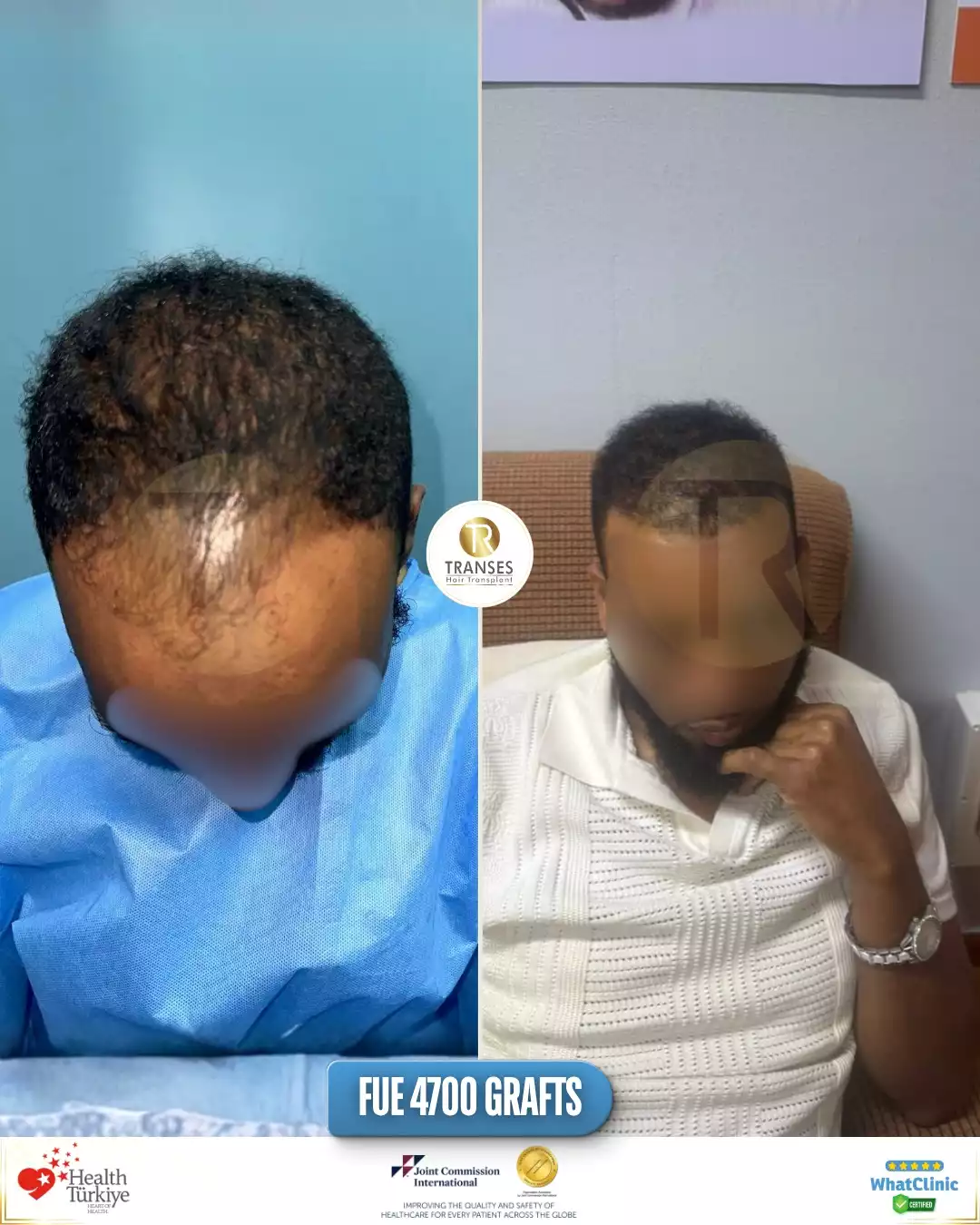
Sapphire FUE is a hair transplant method in which hair follicles are placed into micro-channels opened with sapphire tips. Afro hair transplant, on the other hand, is a hair transplant approach that requires special planning for a specific hair type.
In other words, Sapphire FUE is a technique, while Afro hair transplant is a field of application that requires a special strategy based on hair structure. In Afro hair transplant, Sapphire FUE, DHI, or Hybrid approaches can be evaluated according to the patient's needs.
In Afro hair structure, the graft extraction and placement angle can be more delicate. For this reason, regardless of the technique used, the operation plan must be arranged according to the follicle structure of Afro hair.
In short, the difference is this: Sapphire FUE is the name of a technique, while Afro hair transplant is a hair transplant process that requires special planning based on the patient's hair type.
DHI hair transplant is a method in which hair follicles are placed directly into the recipient area with special implanter pens. Afro hair transplant, on the other hand, is a hair transplant that requires special planning for people with curly or Afro hair structure.
The DHI method can be considered in some Afro hair cases. It can be suitable especially for small areas, hairline design, or densification in specific regions. However, for larger areas of baldness, Sapphire FUE or Hybrid planning may be more accurate.
The main point in Afro hair transplant is that whichever technique is used, it must be applied in a way that suits the patient's hair follicle structure. Because Afro hair follicles can be curved beneath the skin, this requires care during both the extraction and transplantation stages.
The recovery process after Afro hair transplant may vary depending on the technique used, the patient's skin structure, and the scope of the operation. Mild redness, scabbing, sensitivity, or swelling may be seen in the transplanted area during the first days. These are expected, natural processes following a hair transplant.
The first wash is usually carried out under clinic guidance. The patient is given detailed information about hair washing, sleeping position, protecting the transplanted area, and the daily care process.
For patients with Afro hair structure, the care process must be evaluated separately according to their personal hair styling habits. Tight braids, hairstyles that create strong pulling tension, chemical treatments, or practices that could put pressure on the transplanted area should be avoided in the early period.
Temporary shedding may be seen in the transplanted hair during the first weeks. This process is known as shock loss and is a normal part of the hair transplant process. New hair growth usually begins from the third month onward. Visible change increases after the sixth month. The settling of the final result is completed in most patients between 12 and 18 months.
In Afro hair, the visual settling of the results may vary from person to person due to the curl structure and natural volume of the hair. It is important to be patient during this process and to follow clinic instructions.
The hair follicles used in Afro hair transplant are usually taken from the donor area, which is resistant to shedding. With the right donor area selection, healthy graft extraction, and successful placement, the transplanted hair is expected to grow permanently in the long term.
However, a hair transplant does not completely stop existing hair loss. Natural hair that has not been transplanted may continue to shed over time. For this reason, long-term planning is also very important in Afro hair transplant.
In particular, when designing the hairline, the possibility of hair loss in the coming years must be taken into account. A hairline that is placed too far forward or is too aggressive may look impressive in the short term, but can create an unnatural result in the long term.
At Transes, when planning Afro hair transplant, not only the current area of baldness but also the future likelihood of hair loss and the protection of the donor area are taken into consideration.
A natural appearance in Afro hair transplant begins with correctly understanding the hair's curl character. The perception of density in this hair type is different from straight hair. The voluminous structure of the hair strands, when planned correctly, can provide a fuller appearance. The following factors are especially important for a natural look:
At Transes, the goal is not a result that looks artificial or overly dense, but one that is in harmony with the patient's natural hair character and remains balanced over the long term.
Before Afro hair transplant, the patient's hair and scalp condition should be evaluated in detail. The cause of the hair loss, donor area strength, skin structure, previous procedures, and hair care products used should be shared with the expert team.
Before the operation, care should be taken with tight braids, hairstyles that create strong pulling tension, or chemical treatments that could irritate the scalp. If there is active irritation, infection, a wound, or a medical problem on the scalp, treatment may be needed before the operation.
In addition, the patient's expectations should be realistic. Afro hair transplant can provide strong visual density, but the result achieved depends on donor area capacity, hair shaft quality, degree of baldness, and the recovery process.
A clear graft plan and hairline design should be made before the operation. This way, the patient can better understand how the process will unfold.
Early-stage care after Afro hair transplant is very important. In the first days, the transplanted area should not be touched, the scabs should not be forcibly removed, and the washing instructions given by the clinic should be followed.
Hairstyles that could put pressure on the scalp should be avoided. Tight braids, hairstyles that create pulling tension, or practices that could stress the transplanted area can damage the grafts during the early period.
During the recovery process, it is important to maintain the scalp's moisture balance and protect it from irritation. The shampoo, lotion, or care products to be used should be chosen according to the clinic's recommendations.
Attention should be paid to the recommended timing regarding sports, sauna, sea, pool, intense sun exposure, and strenuous physical activity. A hair transplant does not end on the day of the operation — part of the ultimate success also depends on how carefully the patient follows the process afterward.
At Transes Hair Transplant Clinic, Afro hair transplant is treated not as a standard hair transplant procedure, but as a process that requires specialized analysis and personalized planning. Each patient's hair structure, curl character, donor area capacity, and aesthetic expectations are evaluated separately.
What determines the right result in Afro hair transplant is not simply how many grafts are transplanted. The real difference lies in how the hair follicles are extracted, how the donor area is protected, how the hairline is designed, and how the grafts are placed according to the natural hair direction.
At Transes, our goal is to achieve natural, balanced, and long-term results suited to Afro hair structure. All stages, from pre-operative analysis to post-operative aftercare, are carefully planned.
A good result in hair transplantation is the combination of accurate analysis, careful donor management, precise graft extraction, natural angle planning, and a regular follow-up process. Afro hair transplant requires specialized expertise, and every detail matters in this process.
Hair loss level, curl structure, donor strength, and scalp condition are evaluated in detail.
Grafts are extracted and placed with careful angle control suited to Afro hair follicle structure.
Tailored aftercare guidance and settled, natural results within 12 to 18 months.
Afro hair transplant is the transplantation of hair follicles into areas experiencing hair loss in people with Afro, curly, or densely curled hair. This hair type requires more careful planning due to its special follicle structure.
Afro hair follicles can travel in a curved or curled path beneath the skin. For this reason, working at the correct angle during graft extraction requires greater experience and precision.
No. Suitability is determined according to donor area capacity, hair loss type, scalp condition, and a general health evaluation. A detailed analysis should be carried out for every patient.
Yes, Afro hair transplant can also be considered for female patients in suitable cases. It can be planned particularly for hairline recession, traction-related hair loss, or regional thinning.
A natural result can be targeted with the right planning and experienced application. The hairline, curl direction, transplantation angle, and graft distribution are decisive for a natural appearance.
Sapphire FUE, DHI, or a Hybrid approach can be considered depending on the patient's needs. The choice of technique is made according to hair type, area of baldness, donor capacity, and the targeted result.
Yes. As with other types of hair transplant, temporary shock loss can be seen after Afro hair transplant. This process is generally considered normal, and new hair growth begins over time.
New hair growth usually begins from the third month onward. Density becomes more noticeable after the sixth month. The settling of the final result is completed in most patients between 12 and 18 months.
Since the transplanted hair follicles are usually taken from a donor area resistant to shedding, long-term growth is expected. However, shedding may continue over time in the existing natural hair. For this reason, long-term planning is important.
The number of grafts required varies according to the area of baldness, donor capacity, hair shaft thickness, and targeted density. Since the curl structure in Afro hair can affect the perception of density, a personalized evaluation is needed.
To find out whether you are suitable for an Afro hair transplant, you can share your hair photos with our expert team. After your front, top, right, left, and donor area photos are evaluated, a personalized graft plan, technique selection, and hairline recommendation will be prepared for you.
At Transes Hair Transplant Clinic, the goal is not to apply the same method to every patient, but to prepare the hair transplant plan best suited to the person's hair structure, curl character, donor area capacity, and long-term expectations.

Leave your information for solutions tailored to your needs.


 Türkçe
 Deutsch
 Русский
 Français
 Español
 العربية
 Polski
 Italiano
 Română
 Svenska
 Afrikaans
 Português
 Shqip
Shqip 日本語
日本語